Get email alerts on the Environment topic
No spam. Unsubscribe anytime.
Council adopts stormwater-code updates, adds recital on performance tracking
Summary
Council passed the 2026 stormwater code update (Council Bill 121190) to maintain compliance with state permits and strengthened treatment and infiltration standards; Councilmember Rivera added a recital emphasizing Seattle Public Utilities' performance tracking and metrics.
The Seattle City Council unanimously adopted updates to the city’s stormwater code on June 2 to align local rules with the 2024–2029 municipal stormwater permit from the Washington State Department of Ecology and to strengthen treatment and infiltration requirements.
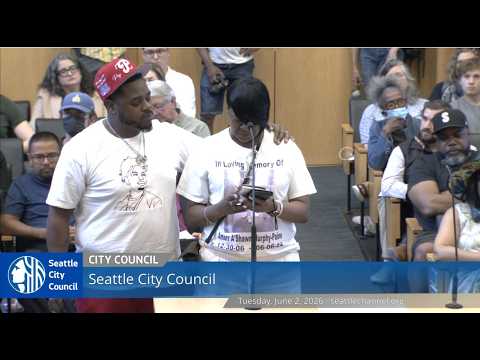
Committee leadership described technical amendments clarifying definitions and flow-control thresholds for small sites. During committee review and at the council floor, public commenters including Dave Logan and others urged the council not to relax runoff standards, citing recent beach closures and sewer-infrastructure strain.
Councilmember Rivera successfully moved Amendment A, a recital acknowledging Seattle Public Utilities’ (SPU) ongoing performance-tracking work and encouraging SPU to explore additional performance metrics related to water quality and stormwater policy. The amendment passed unanimously and the council then passed the ordinance as amended on a roll-call vote recorded as nine in favor.
Public speakers asked for performance-based oversight, tree protection, and assurance that increased lot coverage will not worsen combined-sewer overflows. Councilmembers responded that the legislation includes technical changes and that SPU and departments would be expected to monitor outcomes and report as needed.
The ordinance strengthens technical stormwater requirements and clarifies vesting and review thresholds; Council requested departments provide implementation details and said they will monitor water-quality indicators as the code is applied.
AI generated
The text on this page is AI generated. Summaries, highlights, analysis, and video transcripts are all produced from the original source material.
AI can make mistakes, so if you spot one, and we will fix it for everyone.
Note: the source content is unaltered by us. Any content source we link to, be it a video, an audio recording, or a document, is presented exactly as its publisher released it. That publisher is usually a government body, sometimes an individual official or another organisation.