Get Full Government Meeting Transcripts, Videos, & Alerts Forever!
Get email alerts on the Local History topic
No spam. Unsubscribe anytime.
Residents recount decades of North Yarmouth farming life at historical society session
Summary
Longtime North Yarmouth residents gathered at a Historical Society meeting to record memories and donate artifacts, recalling everything from 21,000-bird chicken houses and local dairies sold to regional firms to blueberry harvests and a surviving apple orchard.
Link Merrill, who convened a community oral-history session for the North Yarmouth Historical Society, opened the meeting by saying the goal was to record memories and add artifacts to the society27s archives. "What we're doing today," he said, "is...talk about agricultural or farming in town," and invited participants to share photos, diaries and stories.
Residents traced decades of local farming change. Merrill and several attendees said North Yarmouth once supported small bottling dairies such as Elm Farm Dairy and North Yarmouth Dairy, which went out of business in the 1940s and were sold to larger regional companies (attendees said Hood and Oakhurst bought local operations). The sales, participants recalled, reflected a broader market consolidation that made small, local dairy bottling less viable.
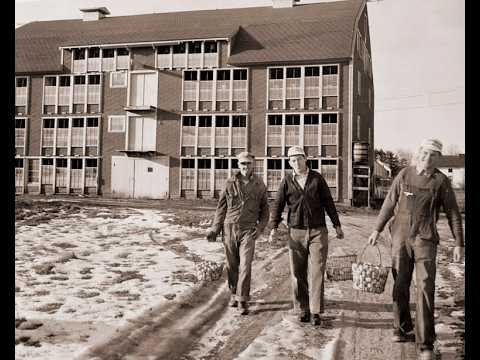
Several speakers described the town27s poultry industry in detail. Susan Fuller, who brought photographs, said her family27s chicken house raised broilers in short production cycles and that at one point "they had 21,000 chickens," describing the heat, cleaning and labor that accompanied broiler production. Participants also described the multilayer chicken houses used for laying hens and the routine of blood-testing and banding birds to certify flocks for disease control.
Blueberry harvesting and the industry27s boom-and-bust economics were a central theme. Dick Knight, who said he began working in blueberries in 1949, described field harvesting by rakers, the role of local packers and processors, and how frost and market cycles could wipe out a season. Knight said growers and pickers were often paid by weight and that companies sometimes delayed final payment until late in the year while crop volumes were finalized.
Attendees also discussed haying, sheep and pasture management. John Haywood and others described adapting equipment and rotating pastures to control disease; one participant said he now produces roughly 250 round bales a year and another recalled farmers routinely moving flocks along town roads during seasonal rotations. Speakers described how sheep were used to keep grass down in ranges for poultry and how breeds were chosen for wool or meat depending on market needs.
Margie Hansel spoke about a local apple orchard she and her family manage. Hanson described the orchard as a mix of older plantings and later Macintosh and Cortland rows and said the property now operates as a pick-your-own site. She noted that changes in processing markets reduced options for selling leftover fruit after about 2002.
Throughout the two-plus hour session, participants displayed and discussed archival items (a 1911 register and a 1945 poultry booklet among them), family photographs, egg scales and shipping crates. Merrill invited attendees to donate materials and to visit the historical society27s archival room, which he said is open monthly and houses many family collections.
The meeting closed with thanks and applause; the society will add donated photos and documents to its collection for future research and public programs.