Get Full Government Meeting Transcripts, Videos, & Alerts Forever!
Get email alerts on the Local Budget topic
No spam. Unsubscribe anytime.
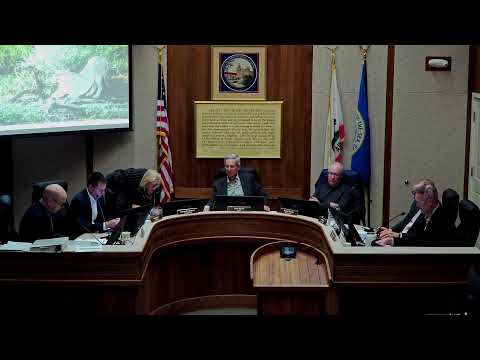
Carmel council adopts FY2026–27 budget, signals new focus on capital repairs amid disputes over beach, marketing and park projects
Summary
The City Council approved the FY2026–27 operating and capital budget and directed staff on budget policy. Debate centered on shoreline projects, a Piccadilly Park restroom cost, and funding for tourism marketing; staff will return with more detail on debated CIP items.
The Carmel‑by‑the‑Sea City Council adopted its FY2026–27 operating and capital budget after a detailed staff presentation and hours of public comment and council discussion.
Finance Director Jamie Fields told the council the proposed budget includes about $39.09 million in revenues and $41.88 million in expenditures, meaning the city would use roughly $2.7 million of fund balance this year. She said operating spending would equal about 85% of projected revenues and that the proposed capital improvement program totaled roughly $8.5 million for the upcoming year. "The proposed operating costs are $41.8 million," Fields said in the presentation.
The council and public focused on several large capital items and near‑term priorities. Residents and coastal advocates pressed the council on beach protection and the condition of revetments and rip‑wrap along the Carmel shoreline; engineers and critics at the meeting questioned the justification and design for a proposed armored 8th Avenue sand ramp. Multiple speakers asked whether the city could prioritize 'restacking' existing revetment material and whether federal or county‑sourced rip‑wrap could be reused. Public commenter Brian Zers warned that some existing revetment sections “are not stacked properly” and need more urgent remediation.
Council debate also examined a proposed Piccadilly Park restroom — a high‑cost item on the CIP — and whether the design and location were the right solution. Several council members and members of the public urged staff to explore lower‑cost alternatives or refinements before committing construction funds. City staff said the current CIP figures include design and placeholder construction costs and committed to return with more refined estimates and alternatives.
Marketing and economic development funding drew high public interest. Visit Carmel announced it had withdrawn a requested contribution; however, council members continued to debate the city’s $292,000 allocation for regional marketing (C. Monterey). Several council members said they want more analysis of return on investment before committing long‑term funding. Council Member Alisandre Berter said the council should revisit the marketing allocation next year and consider trimming the level of support if partners cannot demonstrate impact.
On policy, the council reiterated a move toward a capital‑first budgeting approach to address an identified backlog of deferred maintenance that staff and council estimate in the tens of millions of dollars. Several council members urged that the city sustain at least 15% of revenues for capital projects in coming years and to continue seeking new revenue sources to close the gap.
After debate and amendments, the council adopted the budget resolution and related fiscal items. Council members committed to take additional, agendaed votes on several contested CIP items after staff returns with more detailed scope, cost and alternatives. The city also committed to improved public communication about schedule and procurement for the projects residents flagged as urgent.