Get Full Government Meeting Transcripts, Videos, & Alerts Forever!
Get email alerts on the Budget topic
No spam. Unsubscribe anytime.
Urbana mayor previews tight FY2027 budget, highlights community services and reserves
Summary
Mayor Williams outlined a fiscally constrained FY2027 proposal that prioritizes public safety, housing and local economic development while avoiding new taxes; staff presented fund-level projections, capital plan figures and next steps for formal hearings in June.
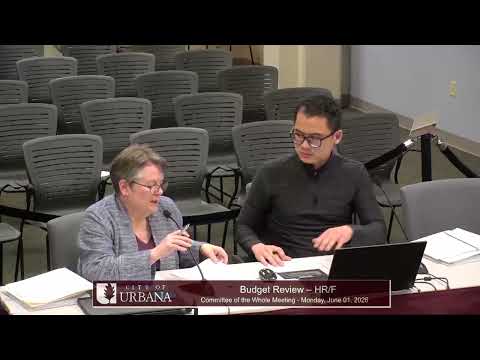
Mayor Williams opened the Committee of the Whole meeting on June 1 with a broad overview of the proposed FY2027 city budget, saying, "I have been honored to serve as mayor of the city of Urbana for just over a year now." The mayor framed the proposal as an effort to protect residents without adding new revenue burdens amid state and federal uncertainty.
The proposal that staff presented to council projects $67.4 million in total revenues across all funds for FY2027 and approximately $51.5 million in the city general fund. Elizabeth Hannon, representing HR and finance staff, and Don Ho, finance staff, walked the committee through key allocations: $1.12 million for community services grants (including roughly $295,000 in recurring portions), $100,000 for youth services grants, $100,000 for unhoused resident assistance and carry-forward community-services funds of about $625,000. The proposed capital-improvement program totals about $90.88 million over five years, with $15.9 million budgeted for FY2027.
Staff also flagged major public-safety and capital items in the draft: engine replacement ($1.27 million) and a ladder truck ($3 million), with deliveries projected in FY2030 and FY2031; a new fire prevention and education officer position was highlighted for further discussion; and continued reserves of approximately $4.6 million were proposed to buffer potential future funding losses. Don Ho emphasized that FY2027 is unusually tight and that the council will have limited flexibility without new recurring revenues.
Don told the committee that three revenue changes drove the all-funds revenue decline versus the prior year: (1) timing of grant receipts, (2) the closure of a major fund that reduced receipts in FY26, and (3) one-time bond proceeds recorded in FY26 that are not expected in FY27. Staff noted the state legislature’s final budget left an expected $200,000 intact, easing but not eliminating pressure on the city’s recurring budget.
What happens next: staff said the committee will focus on specific line items in upcoming meetings, with a public hearing scheduled when the budget ordinance returns to committee on June 15 and an expected council vote on June 22. The presentation and fund-level charts will be available in the meeting packet for members and the public to review.
Ending: The committee did not take a final budget vote; the council will consider formal adoption during the public hearing and regular council process in mid-to-late June.