Get Full Government Meeting Transcripts, Videos, & Alerts Forever!
Get email alerts on the Infrastructure topic
No spam. Unsubscribe anytime.
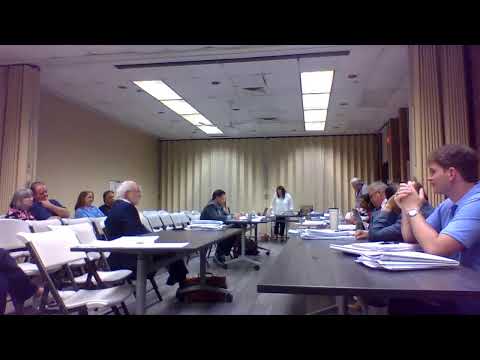
Planning board approves New Jersey American Water site improvements at Raritan/Millstone plant
Summary
The Bridgewater Planning Board granted preliminary and final site‑plan approval for two small utility buildings at the New Jersey American Water Raritan/Millstone treatment plant, after hearing testimony on operations, flood protections and safety measures.
The Bridgewater Planning Board on June 2 approved site‑plan changes at the New Jersey American Water Company’s Raritan/Millstone water treatment plant, authorizing construction of a 1,000‑square‑foot welding shop and a 3,000‑square‑foot storage building to replace and formalize on‑site fabrication and equipment storage.
Board members heard testimony from company representatives and consultants explaining the changes are limited in scope and will not add employees or public access. Neil O’Brien, the applicant’s attorney, said the proposal concerns upgrades at the large treatment facility on Lot 342 and noted the property is an essential service in an M2 general manufacturing zone.
The board’s senior production manager and licensed operator, Frank Marascia, described plant operations and safety measures that factored into the board’s review. “This plant roughly produces 130 million gallons a day of potable drinking water,” Marascia said, adding the site runs 24 hours a day, is staffed year‑round and is protected by a perimeter fence, a flood wall and a guarded entry. He also said the plant supplies water to about 74 municipalities across five counties.
Marascia told the board that welding is already performed on site and that the proposed welding shop replaces a prior building in the same footprint. The storage building will enclose large portable pumps and equipment now stored outdoors. Both buildings will include mezzanines and sprinkler systems; welding and cutting work will be carried out under an exterior overhang, not inside the new shop, the applicant said. The applicant confirmed that oxy‑acetylene tanks (typically two on site) are used in welding operations.
Board members asked about past chemical use, emergency response and flood protection. Marascia said the plant moved from gaseous to liquid ammonia in recent years and has not reported operational problems related to the change. He described an encircling flood wall built after Hurricane Floyd, topped at 48 feet above mean sea level, with inflatable gate bladders used to seal gates during high‑water events; the plant maintained operations through Superstorm Ida, he said.
The planning board’s engineering and planning professionals reviewed circulation, stormwater and parking. The applicant said there are roughly 75 parking spaces on site and that no increase in staff is anticipated, so traffic and parking impacts are minimal. The applicant also agreed to submit a copy of FEMA/LOMA documentation and to comply with any outstanding fire‑official comments.
Following testimony and questions from board members, the board moved and carried a motion to grant preliminary and final site‑plan approval for the two utility buildings. The board recorded affirmative roll‑call votes from attending members and the motion passed.