Get Full Government Meeting Transcripts, Videos, & Alerts Forever!
Get email alerts on the Historic Preservation And Redevelopment topic
No spam. Unsubscribe anytime.
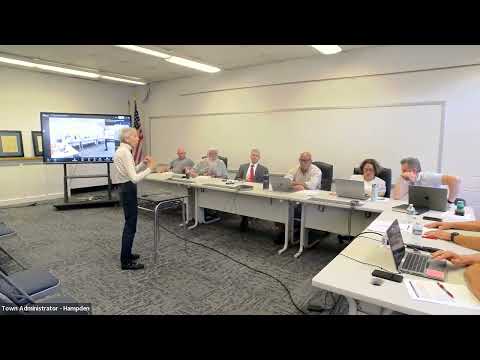
Hampden study committee agrees to pursue public-private partnership for Old Town House redevelopment
Summary
The Town of Hampden Old Town House Study Committee on June 3 reviewed five redevelopment paths — from demolition to a new fire station — and accepted a motion to pursue a public-private partnership to rehabilitate or adaptively reuse the historic building while clarifying language and outstanding questions before a public rollout.
The Town of Hampden Old Town House Study Committee voted June 3 to pursue a public-private partnership to develop the historic Old Town House after reviewing five redevelopment options that range from full demolition and park conversion to a combined fire station and civic wing.
The committee’s presenter summarized five “paths” for the site, including a fire-station-first option that would retain the building’s colonial facade while demolishing the structure behind it, a private-public rehabilitation approach, a developer leaseback model, a town-led renovation, and demolition followed by creation of a park. The presenter said combined costs for a fire station plus civic wing could be roughly $10.4 million to $15.7 million; funding beyond the town’s previously approved $8.3 million was estimated at about $2.1 million to $7.4 million. The committee also heard an estimate that demolition and asbestos abatement would cost roughly $583,000–$833,000, including about $343,000 for abatement.
Committee members pressed for clearer wording in the draft description of the public-private partnership — specifically whether a private developer would acquire the property, whether the town would retain title or hold a ground lease, and which funding sources (private, public, charitable) would be allowed. One member asked the committee to delay public presentation until the committee agrees on language that matches the motion it intends to forward.
A motion was made and seconded instructing staff to revise the public-private partnership language and to proceed with a version that allows public, private, or charitable capital and clarifies ownership and lease options; members then accepted the motion. The committee agreed to circulate the revised text by email before public posting and to forward its recommended motion to the select board for consideration.
Residents spoke during public comment, including a prepared statement urging preservation. A resident reading a historical account argued the building was a gift to the town in 1931 and warned that demolition would permanently erase a civic landmark. “Once gone, gone forever,” the commenter said, urging the committee to exhaust preservation funding options such as historic-preservation grants, the Community Preservation Act, and other state or federal rehabilitation programs before taking irreversible steps.
Members also raised fiscal concerns: several cautioned that Hampden faces other large capital demands (including a fire bond and an expected middle-school project), and that any redevelopment strategy should account for tax impacts, potential new revenue from a sale or lease, and the town’s capacity to carry additional capital obligations.
What’s next: the committee will refine the partnership language and related questions (zoning limits, deed restrictions, required community benefits such as public meeting space or facade preservation, and whether town offices or library space would be displaced) and circulate the revised motion text to members before posting it publicly and sending its recommendation to the select board.