Get Full Government Meeting Transcripts, Videos, & Alerts Forever!
Get email alerts on the Transportation topic
No spam. Unsubscribe anytime.
SOMA shuttle group pitches joint Maplewood–South Orange community shuttle; grant could fund vehicles and operations
Summary
Community volunteers proposed a loop-based shared shuttle linking Maplewood and South Orange to improve mobility for teens, older adults and people with disabilities. The working group recommended a community survey, pilots, and pursuing an NJTPA mobility grant (possible awards $185,000–$750,000; 25% match).
A volunteer working group on June 3 presented a proposal for a community shuttle to connect destinations across South Orange and Maplewood, aiming to expand mobility for teens, older adults, residents with disabilities and the general public.
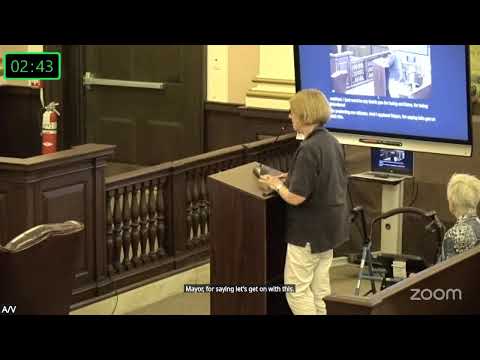
Julia Flath, who identified herself as a Walk Bike Ride South Orange member, framed the project as a loop-based, accessible shuttle that could run beyond commuter hours and link downtowns, train stations, senior centers and schools. "Our vision is to establish a communal shuttle service that links both towns, enhancing mobility for residents of all ages," she said.
Presenters described immediate next steps: a community survey to identify preferred routes, times and populations; additional pilots at events; and competitive grant applications. The group flagged a federal-local funding opportunity administered by the New Jersey Transportation Planning Authority (NJTPA) Local Mobility Initiatives program, which has awarded $185,000–$750,000 to similar projects and allows 3–5 years of operating support, subject to a 25% municipal match.
Working-group members and youth representatives stressed benefits beyond transit: improved access to jobs and extracurriculars, reduced parking pressure for local businesses, and lower greenhouse-gas emissions. Violet Kesler of the Maplewood Youth Advisory Committee told the committee the shuttle could foster independence for teenagers and increase access to sports, jobs and community events.
Committee members focused discussion on operations and cost-effectiveness. Concerns included whether sustained daily ridership would justify recurring expenses, how electric jitneys’ charging windows interact with service hours, and whether starting with event-focused pilots or limited loops would be more practical. Staff said Maplewood currently operates a small fleet of jitneys (three electric and three older vehicles) and a senior dial-a-ride service; those assets could factor into pilot designs but present scheduling and charging constraints.
South Orange Mayor Sheena Collum, joining by Zoom, said Seton Hall University’s market-research center (not a marketing class) could help design a statistically valid fall survey and run focus groups; she also noted South Orange has budgeted $15,000 for deportation-defense supports and offered to share lessons learned on structuring such funds.
The committee directed the working group to proceed with a community questionnaire (distributed online and in print), coordinate pilots, engage DPW and community partners, and return with a narrowed proposal and proposed grant strategy.
Next steps: working group to finalize a survey instrument (including printed copies for libraries and pool events), run targeted pilots, consult with DPW on operational feasibility, and develop an NJTPA grant application if survey results indicate sufficient demand.