Get Full Government Meeting Transcripts, Videos, & Alerts Forever!
Get email alerts on the Immigration Policy topic
No spam. Unsubscribe anytime.
Maplewood committee moves to codify immigrant trust protections, adds companion rule on restricted access to municipal spaces
Summary
The Maplewood Township Committee introduced a draft Maplewood Immigrant Trust Act that would bar municipal resources from being used for federal civil immigration enforcement except under a valid judicial warrant, and proposed a companion ordinance to allow the township to designate nonpublic areas of municipal facilities. The measures were set for introduction June 16 after discussion and public input.
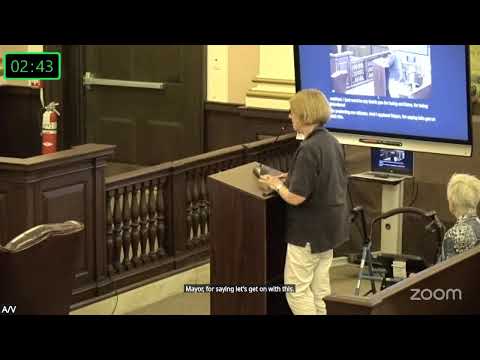
The Maplewood Township Committee on June 3 vetted a draft Maplewood Immigrant Trust Act intended to convert the township’s prior welcoming-resolution policies into enforceable municipal ordinance language.
The ordinance would direct that township departments, employees and volunteers not expend municipal time, funds, property or other resources to facilitate federal civil immigration enforcement operations unless compelled by a validly issued judicial order or warrant. Committee members said the draft also would bar honoring ICE administrative detainer requests and would prohibit new contractual arrangements with federal immigration authorities.
Mayor Duca and others described the measure as a clarification and strengthening of existing local policy designed to protect residents’ privacy and maintain public-safety priorities. The draft also names the business administrator as the official responsible for identifying nonpublic areas within municipal buildings—behind-service counters, employee break rooms, storage and similar spaces—and requires that law enforcement or other officials seeking access present a judicial warrant before entry to those restricted portions of township facilities would be permitted.
Committee members and township attorney preparations emphasized implementation steps: within days to 90 days of enactment the police chief and the business administrator would update operational orders and train staff so frontline personnel can recognize valid judicial process versus administrative immigration requests. The draft ordinance also directs the township to produce clear frequently asked questions and engage community partners for education and outreach.
Public commenters asked for tighter definitions (what constitutes a judicial warrant vs. an administrative document), language-access support, and better detail on how residents might secure legal help. Committee members and the township attorney said the ordinance will be paired with FAQs and town-hall presentations to explain rights and procedures. The committee did not adopt the ordinance on June 3 but agreed to introduce it for formal consideration at its June 16 meeting and to continue refining implementation language.
Several practical limitations were discussed. Township counsel said New Jersey municipalities have limited authority to appropriate municipal tax revenues for civil-immigration legal representation; the committee agreed to instead expand referrals and public-information pathways to pro bono and legal-aid providers and to explore discrete, programmatic supports (for example, existing emergency-assistance funds that already address homelessness, shelter or other immediate needs) rather than a general municipal legal-defense appropriation.
Next steps: the committee scheduled the two related ordinances—Maplewood Immigrant Trust Act and a separate ordinance on restricted access to municipal property—for introduction on June 16 with subsequent public hearings and further edits after community feedback.