Get Full Government Meeting Transcripts, Videos, & Alerts Forever!
Get email alerts on the Tax Policy topic
No spam. Unsubscribe anytime.
Commission directs staff to draft mill-levy consolidation plan; separate bid to repeal ambulance and senior levies fails
Summary
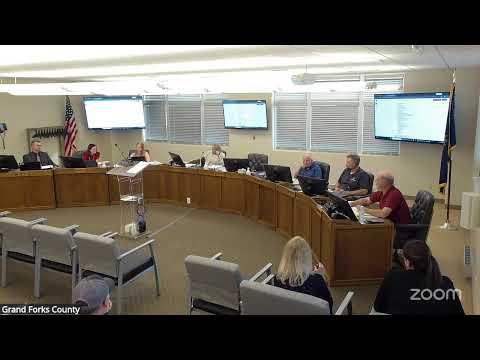
Grand Forks County commissioners unanimously asked staff to draft legal language and options for consolidating multiple county mill levies into a capped, flexible pool. A separate proposal to put mandated ambulance and senior-center levies on the November ballot was defeated 3–2 after heated debate over optics and likely voter response.
Grand Forks County commissioners on Tuesday narrowly split over whether to ask voters to reconsider two longstanding, voter-imposed levies even as they unanimously directed staff to pursue a separate mill-levy consolidation concept.
Commissioner Terry Bierky argued the county should seek voter approval to consolidate several dedicated mill levies into a single capped pool to give elected officials budgeting flexibility and to require a 60% voter threshold for future increases. The board voted unanimously to ask county staff and counsel to draft language and run the legal and fiscal analysis needed to consider placing that measure on the November ballot.
Bierky described the consolidation as a way to manage “old” century-code line-item levies that lock funding into narrow buckets and said the proposal would include a self-imposed cap lower than the aggregated current levies. Ms. Walmsted and county staff were directed to prepare precise wording and legal opinions.
A separate proposal from Bierky to put two specific, currently mandated mill levies — 6 mills for ambulance service and 1 mill for the senior center — before voters in November prompted a longer, more partisan exchange. Supporters said voters should decide whether those levies remain exempt from annual budget trade-offs; opponents warned the campaign would be framed as taking money away from emergency responders and seniors and would be politically unworkable.
Commissioner Rustad and others argued the optics would make it difficult to win public support and that staff time and legal expense could be wasted on a losing campaign. In the end, the motion to place the ambulance and senior-center levies on the November ballot failed 3–2.
The board’s actions now split two policy paths: staff will prepare a consolidation proposal for further review, while the county will not pursue immediate voter action to repeal or reconfigure the two mandated levies. Commissioners said the next steps will include cost projections, sample ballot language and public outreach plans if the consolidation measure moves forward.
What happens next: staff will return with draft language, legal analysis and financial scenarios. Any actual placement on the ballot would require subsequent formal action by the commission.