Get Full Government Meeting Transcripts, Videos, & Alerts Forever!
Get email alerts on the Facilities Reconfiguration topic
No spam. Unsubscribe anytime.
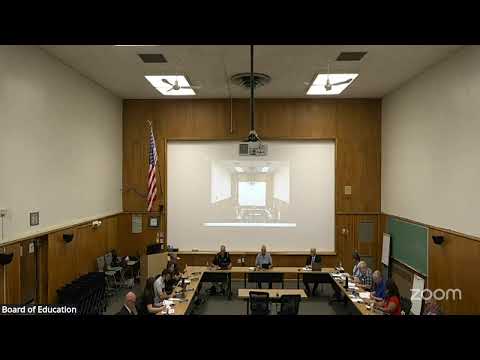
Board reviews 'True North' utilization plan proposing grade reconfiguration, STEM hub and possible December referendum
Summary
Superintendent Dr. Ward presented the 'True North' plan recommending CNS High School become grades 9–12, North Syracuse Junior High host grades 7–8, two intermediate schools hold grades 4–6, and six elementary schools shift to pre-K–3; the plan targets 2027–2028 start and highlights a proposed STEM hub and a potential December capital referendum.
Dr. Ward presented the district’s "True North" long-range plan to the Board of Education, describing recommended grade reconfigurations, facility changes and a strategy for a potential December capital-project referendum. The administration said the plan is intended to align instruction, preserve programming, and remain financially disciplined while maintaining off-ramps if local demographics change.
Under the recommended configuration, CNS High School would serve grades 9–12, North Syracuse Junior High would host grades 7–8, two intermediate schools (Roxboro Road and Gillette Road) would serve grades 4–6, and the district’s six elementary schools would serve pre‑K through grade 3. Dr. Ward said implementation would begin in the 2027–2028 school year and that the short-term plan keeps NSEP in its current building.
The plan includes a conceptual STEM hub at the front of CNS High School, a reconfigured bus loop that brings student drop-off under cover, new or improved STEM labs visible from the entrance, and other campus enhancements (a new pool and an illuminated fly tower were shown in concept renderings). "This is our True North plan," Dr. Ward said, urging continued public engagement and further review by the facilities committee and fiscal advisors.
Administration noted declining enrollment—about 1,500 students over the last decade—and said that on paper the high school has capacity for an additional grade level; officials also emphasized flexibility to adjust plans if large local employers (for example, Micron) drive rapid enrollment increases.
Board reaction mixed. Mr. Ledden asked whether the STEM hub would displace the library; administration said the design envisions relocating the library while maintaining the building footprint by building down. Mr. Crabtree raised process and programmatic concerns and warned of scheduling limits at the high school: "I am disappointed as an elementary teacher. I'm not thrilled with K 3," he said, and also flagged the risk of temporary empty classrooms in some elementary schools during transitions.
Administration also noted a state funding change for pre‑K: district officials said per‑pupil pre‑K funding has increased from roughly $6,000 to $10,000, making a district-run pre‑K program more viable than when the utilization study began.
What’s next: Dr. Ward said the board will take additional facilities-committee review, hold public information sessions and publish an FAQ (a QR code was shown for community input) ahead of any referendum decision. The administration is preparing phased options and cost estimates for the board and community review.