Get Full Government Meeting Transcripts, Videos, & Alerts Forever!
Get email alerts on the Special Events topic
No spam. Unsubscribe anytime.
Commission approves controlled alcohol sales at Riley County Fair with vendor conditions
Summary
Commissioners approved a beer garden and controlled alcohol sales at the Riley County Fair after fair-board presenters described a managed, fenced area with security entrances; commissioners discussed limiting hard liquor and confirmed fee proceeds would support fair youth projects.
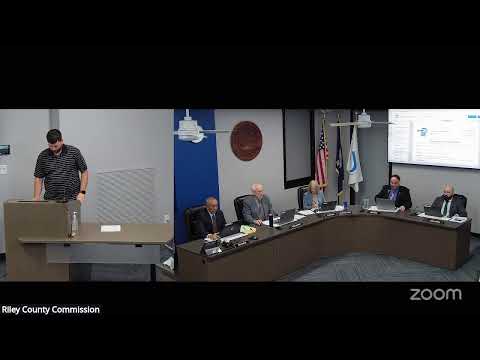
Representatives of Manhattan Brewing Company and the Riley County Fair Board asked the county to approve on-site, controlled alcohol sales at the Riley County Fair in a fenced beer-garden area between Potter Hall and the beef barn. Jake Bogalai (Manhattan Brewing Company) and Andrea De Jesus (Riley County Fair Board) described plans for a contained service area with staffed entrances, fencing, table seating and a donated tap trailer from Standard Beverage; they said proceeds or fees to the fair board would support youth prizes and fair programs.
Commission discussion centered on the hours proposed (up to 11 a.m.–11 p.m. on event nights), whether to allow hard liquor or limit sales to beer and cider, and how to prevent alcohol leaving the fenced area. Presenters said security staff would be stationed at entrances, and the proposal would follow state licensing requirements for a full catering license. Commissioners moved, seconded and approved county fair alcohol sales; one commissioner abstained during the voice vote on the record.
What to watch: staff indicated the county will update the standing resolution that previously allowed beer at rodeo events so the fair sales and any hard-liquor permissions are explicitly authorized; event operators must comply with state licensing and county conditions.