Get Full Government Meeting Transcripts, Videos, & Alerts Forever!
Get email alerts on the Mvp Action Grant Rules topic
No spam. Unsubscribe anytime.
MVP FY27 Action Grant: caps, match rules, one-stop application and webinars
Summary
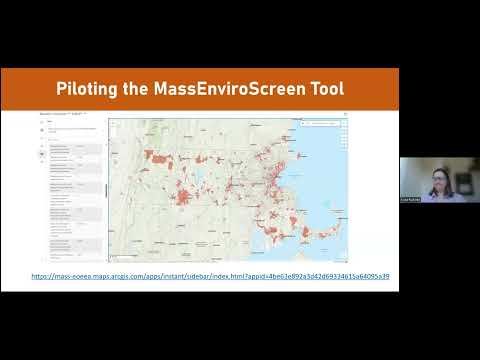
MVP staff outlined FY27 Action Grant rules: individual project caps of $3 million ($5 million for regional projects), a 10% match of requested grant funding (waived for tribal governments and designated rural/small towns), reimbursement payments, and ECO One Stop application webinars slated for Jan. 27 and Jan. 28; applicants were advised to use Mass EnviroScreen data in their materials.
Marissa Robertson, deputy director of the MVP program, walked applicants through key details for the upcoming FY27 Action Grant round, including eligible applicants, project types, caps, match requirements and webinar dates.
Robertson said the prior action grant round received 158 applications requesting roughly $109.6 million; 54 projects (about a third) were funded from a total funding pool of $28.5 million and an average award size of approximately $527,900. She said the FY27 Action Grant application will be hosted through the ECO One Stop single-application process and that the program will hold two identical ECO One Stop webinars on Jan. 27 and Jan. 28; a separate webinar will cover the new EEA Grants Management System platform that will host the application.
Key program rules highlighted in the webinar: - Project caps: $3,000,000 cap for individual projects, $5,000,000 cap for regional projects. - Match: a 10% match requirement applies to the requested grant amount (not the total project cost); tribal governments and designated rural and small towns have no match requirement. Robertson said the list of eligible designated rural/small towns will be available via the Office of Rural Affairs and linked in the application. - Timing and reimbursement: MVP funds are reimbursement-based; projects may be funded as one- or two-year awards depending on scope and available funding, and in some cases projects are scoped to one year.
Eligibility and project types: Robertson said eligible applicants include municipalities with MVP designation (1.0 or participating in 2.0), Commonwealth subdivisions (cities, towns, counties, districts, authorities, commissions, boards) and tribal governments. Project types remain Type 1 (planning/assessment/capacity building), Type 2 (design and permitting, with an emphasis on action-oriented permit preparation rather than permitting research), and Type 3 (construction/implementation), for which required permits/permissions must be demonstrated in applications.
Robertson also listed projects not competitive in the Action Grant round, including climate action plans now handled in MVP 2.0, fossil-fuel generators, tree removal with exceptions, FEMA hazard mitigation plans, projects that fail to incorporate future climate projections, and projects that seek to 'repair to previous conditions.'
Q&A clarifications provided during the session included confirmation that a $3 million cap for a two-year project applies to the whole project (not per year); that communities that previously received construction awards remain eligible to apply again; and that project-specific questions should be directed to regional coordinators in the coming weeks because staff will not answer project-specific questions after the application opens. Presenters reminded applicants that specific ECO One Stop application details and the Mass EnviroScreen demonstration will be covered in the ECO One Stop webinars after the application is released.