Get Full Government Meeting Transcripts, Videos, & Alerts Forever!
Get email alerts on the Election Administration topic
No spam. Unsubscribe anytime.
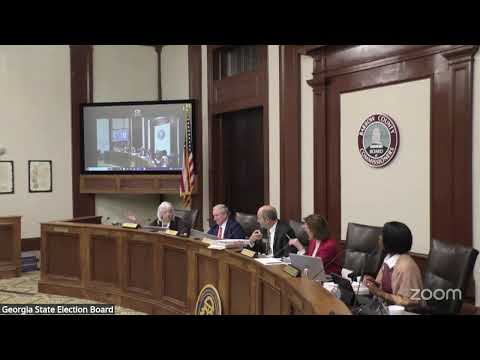
Georgia State Election Board clears dozens of complaints, issues reprimands and subpoenas Secretary of State over data migration
Summary
At its Feb. 18 meeting the Georgia State Election Board dismissed multiple cases, issued letters of reprimand to campaigns and counties and voted to subpoena the Secretary of State to explain apparent data errors tied to the ENET→Jarvis migration and late tabulation reporting in Chatham County.
The Georgia State Election Board convened Feb. 18 in Atlanta and moved quickly through a long agenda, dismissing several complaints, issuing letters of reprimand and referring numerous matters to the attorney general’s office.
The board, chaired by John Fier, dismissed a batch of cases the panel found suitable for administrative closure and approved directed referrals where investigators had identified potential statutory violations. “We have a motion to dismiss those four above name cases,” the chair said as the board voted to clear several matters on the consent portion of the docket.
Why it mattered: the meeting combined routine remedial items — letters of instruction and reprimand for poll‑worker errors and campaign materials too close to polling sites — with higher‑stakes investigative concerns that cut across counties. Dr. Janice Johnson, a member of the board, pressed investigators about long delays in some probes: “This is very important and … it’s very bothersome that it takes so long to get something investigated, particularly when it concerns extra voting,” she said, raising concern about multi‑year open files tied to 2020–2021 complaints.
Standing items and disciplinary actions: the board approved a reprimand to America PAC for distributing partially prefilled absentee‑ballot applications contrary to state requirements, and issued multiple letters of reprimand to county election officials and poll workers after procedural lapses (for example, early opening of a polling place, unsecured tabulation printers, or failure to follow chain‑of‑custody steps). The board also referred multiple county‑level matters — including several that related to possible noncitizen registrations and improper registrations in county files — to the Georgia attorney general.
Chatham County tabulation: county election staff described a failure to upload early‑voting tabulator data on Nov. 5, 2024 after a software change in the election‑night reporting system. Chatham officials said votes were visible on memory cards but tabulator closing tapes were not consistently available; the county later followed SOS guidance, reprocessed memory cards and printed reports before certification. The board issued a letter of reprimand to Chatham and opened a separate inquiry into chain‑of‑custody and tabulator‑tape inconsistencies.
Data migration and a subpoena: several citizens and county officials raised a separate, recurring worry: records that appear to show duplicate registrations or double voting in historical records after the state’s transition from ENET to the new Jarvis voter‑registration system. Counties reported that public‑facing voter history or older exported files can show multiple vote credits linked to duplicate registrations that were supposed to have been merged; county records frequently show only a single vote and investigators could not produce paperwork documenting a second, distinct vote for those individuals. In response the board voted to continue the matter and subpoena the Secretary of State’s office for a public explanation of the ENET→Jarvis migration, the data‑merge rules and any counties affected.
What the board asked counties to do: board members repeatedly urged local election offices to tighten procedures — place completed absentee‑ballot packets and returned provisional ballots into secured, documented custody, count and file daily tabulator tapes when they close machines, and train poll workers to avoid on‑site mistakes. Multiple county attorneys and election directors testified they had updated training, changed checklists and corrected policies after issues were discovered.
Next steps: the board asked investigators to open follow‑up inquiries in several cases and scheduled a return appearance from the Secretary of State. Dozens of matters on the docket were resolved by administrative action; several others were continued while investigators collect additional records.
The board’s actions leave several outstanding accountability questions unresolved — most notably the source of the duplicate‑record credits residents and citizens researchers found in older election exports — and ended the day with a formal request that the Secretary of State explain the data and the controls that were used during the system migration.