Get Full Government Meeting Transcripts, Videos, & Alerts Forever!
Get email alerts on the Water Management topic
No spam. Unsubscribe anytime.
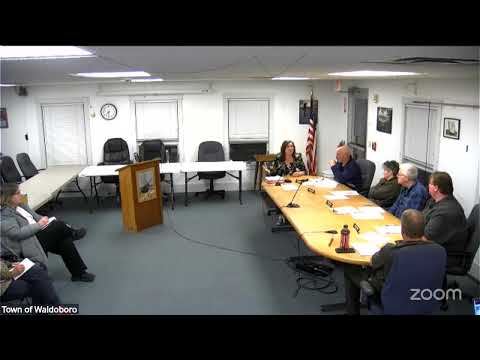
Waldenborough manager briefs board on town-owned water system, hydrant subsidy and oversight
Summary
The town manager briefed the board on the town-owned water system (acquired in 1999), explained operations are contracted to Maine Water, described treatment and infrastructure (three wells, 500,000-gallon tank, ~7 miles of piping), and discussed hydrant subsidies, PUC rules, and the separate water fund; the board asked for an annual or quarterly informational report to improve oversight.
The town manager and staff gave the Select Board a detailed overview of Waldenborough's town-owned water system, how it is operated under contract with Maine Water, and the financial and oversight arrangements that govern hydrant subsidies and capital planning.
The manager said the town acquired the private water system in 1999 after state regulators and a court process determined the prior private operator posed public-health risks; operations are contracted to Maine Water while the town retains ownership of pipes, wells, tanks and other physical assets. The system serves roughly 400 customers via three active wells, a 500,000-gallon storage tank and about seven miles of distribution piping. Treatment includes ion-exchange and aeration for naturally occurring uranium and radon; the town does not fluoridate drinking water.
On finance and oversight, staff described a multi-year effort to stabilize the water fund after a period of instability. The town implemented a phased rate increase from 2021 to 2023; current PUC rules govern hydrant charges and allow a minimum revenue requirement that affects the annual hydrant-rental fee. The manager emphasized that the water fund is a separate, self-balancing fund whose cash and debt are distinct from the town's general fund and that the budget committee and select board have limited direct authority over some water-fund decisions other than informational oversight.
Board members asked for regular reporting to reduce opacity around the fund balance, debt and upcoming capital requirements (for example, pump-station work). The manager and members agreed to provide a periodic report (annual or quarterly) to the board and the budget committee, and staff agreed to present more detailed capital cost estimates once an engineer has produced a design and firm estimate.
Why it matters: the town-owned water system provides essential public-safety services (hydrants, municipal facilities, school, medical facilities) and carries capital-planning and debt-service implications that should inform budget decisions. Providing the budget committee and select board with regular, comparable summaries will help align subsidies, hydrant fees and rate-setting with capital needs.