Get Full Government Meeting Transcripts, Videos, & Alerts Forever!
Get email alerts on the Indoor Air Quality topic
No spam. Unsubscribe anytime.
District reports ventilation project cut classroom CO2 peaks below 1,000 parts per million
Summary
Contractors and district staff told the RSU 15/MSAD 15 school board that a multi-school indoor air‑quality and ventilation upgrade completed in April 2026 cut predominant peak CO2 levels in sampled rooms from many readings above 1,000 ppm (some above 2,000 ppm) to below 1,000 ppm, improved controls and added duct-cleaning and asbestos abatement work; board members pressed for long-term maintenance and monitoring.
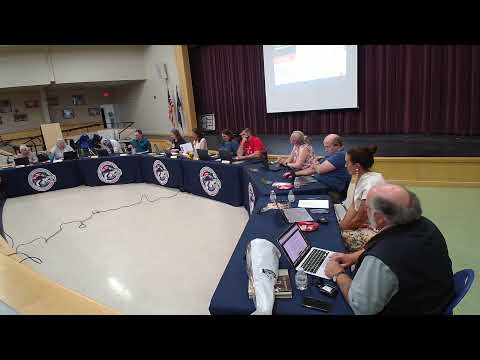
The RSU 15/MSAD 15 school board heard a final report on a districtwide indoor air‑quality and ventilation upgrade that administrators said began with a State Revolving Fund (SRF) application in October 2023 and finished in April 2026.
Contractor Bronson Geman, the on-site project manager, and consultant Steve Ferguson described the project’s scope: replacement of aging air handlers, installation of a digital building‑management control system, duct cleaning across four schools, targeted asbestos abatement found in one mechanical room, and commissioning that included CO2 monitoring of representative rooms. Geman said crews also made incidental repairs and upgrades—replacing rusted door hardware, insulating piping and attic equipment, and painting exposed ductwork to improve longevity and appearance.
“Throughout the four schools we measured predominant peaks well above 1,000 parts per million before the project, and after the work those predominant peaks are under 1,000,” Ferguson said, summarizing the CO2 sampling that the team used as a performance ‘report card.’ He added that the new direct‑digital controls allow staff to trend CO2 and alarm on critical conditions.
Why it matters: CO2 trends are a practical proxy for ventilation effectiveness; the presenters said repeated predominant peak readings above 1,000 ppm indicated under‑ventilated rooms before the upgrade, and bringing those peaks below that threshold shows the systems are ventilating occupied spaces more effectively. Board members and administrators framed the project as primarily an air‑quality effort with additional operational benefits.
Board members asked how results will be sustained. Ferguson and Geman said maintenance is essential: routine filter changes, clearing outside‑air intakes, and periodic flushing of closed‑loop boiler water to prevent sensor fouling. Ferguson recommended continuing a professional maintenance contract and taking advantage of the building‑management system’s alarms and trend data to detect drift.
On cost and funding, the presenters and board said the district combined SRF funds and low‑interest bonding; one board member noted some project funding carried 0% interest. The district does not yet have a confirmed, attributable year‑over‑year energy‑savings dollar figure; presenters said isolating energy impacts would require at least a year of utility bill data and weather normalization.
What happened next: the board praised the work and asked administration to make before/after photos and summary charts available on the district website for taxpayers. Administrators agreed to return with follow‑up information on maintenance plans and a potential schedule for reviewing CO2 trends and energy comparisons.
Provenance: topicintro SEG 1235; topfinish SEG 2215
Quotes
“When we apply good ventilation systems to a school building, this is the kind of result that we see,” Steve Ferguson said of the post‑project CO2 data.
“We found a coil that looked like a rug from years of buildup,” Bronson Geman said, describing duct cleaning and the value of the commissioning process.
Speakers cited in this article: Steve Ferguson (consultant), Bronson Geman (project manager), Dr. Turner (superintendent), Chair (board).