Get Full Government Meeting Transcripts, Videos, & Alerts Forever!
Get email alerts on the Utility Rates Infrastructure topic
No spam. Unsubscribe anytime.
St. Albans officials outline $90M–$108M water and sewer overhaul, propose phased rate hikes
Summary
City and MUC staff presented a multi‑phase $90M–$108M capital plan to repair plants, replace aging lines and install radio-read meters; officials said phased rate increases are needed to qualify for grants and low‑cost loans, while residents warned the changes would hit low‑income and fixed‑income households hardest.
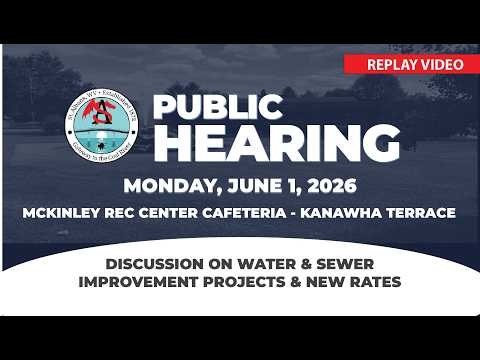
St. Albans officials on Monday laid out a multi‑phase plan to overhaul the city’s water and sewer systems and proposed phased rate increases intended to let the city qualify for grants and lower‑cost, long‑term loans.
The public hearing on the Municipal Utilities Commission’s water and sewer rate ordinances and companion bond ordinances featured engineering and finance briefings followed by residents’ questions. Greg Belcher of Chapman Technical described work on the roughly 105‑year‑old water plant, distribution‑line replacements and a three‑phase program for water and sewer; Michael Griffith, the MUC’s CPA, summarized financing options and the projected customer impacts.
Belcher said the engineering plans include plant renovations, replacement of aging pipe and lift stations, an infiltration and inflow study to identify where stormwater is entering the sanitary system, and a GIS mapping effort to replace 60‑year‑old paper maps. "We’ve got water lines in the ground today that are 100 years old still in service," Belcher said, and the projects will not replace the plant wholesale but will prioritize equipment that needs upgrading.
Griffith said the financing strategy is to phase rate increases so the city’s typical bill reaches a share of median household income (MHI) that makes the community eligible for state and federal grants and better loan terms. He cited St. Albans’ 2020 MHI of $50,009.69 and said eligibility thresholds and loan terms improve as rates move toward 2% of MHI. "This rate proposal takes up to $77.55" for average water usage by fiscal 2030/2029, Griffith said; he also presented an estimated sewer increase from about $34.50 today to about $75.93 by the same date.
Officials gave differing aggregate cost figures in the presentation: Belcher and staff described roughly $50 million in water work and just over $50 million for sewer work, while Griffith characterized the overall investment program as approximately $108 million. At least one audience member referenced a figure of $91,100,000 mentioned later in the hearing. Officials said the final financing package will blend grants, loans and the rate increases and that grant awards and congressional funding remain uncertain.
Residents said the increases would be substantial for many households. "Last month my bill was $123. By 2029, under the final step of your ordinance, this exact same bill will nearly double," said Luca, a St. Albans resident during public comment. Luca and other commenters said the schedule is back‑loaded — smaller increases early, larger ones later — and argued that the plan would disproportionally affect seniors and families on fixed or low incomes.
Officials responded that phasing is intended to make the city eligible for favorable funding and to avoid a single large immediate spike. The presiding official and staff also reiterated opposition to selling the system to West Virginia American Water, which had been discussed by council previously: the presiding official said he would "fight it tooth and neck" while he serves in his role.
City staff answered multiple technical and procedural questions about grant timing, bidding and staffing. Belcher said much of the construction will be bid out because the city does not have the capacity to do all the work in‑house; Griffith said the city has applied to the West Virginia Infrastructure Council/IJDC and to congressional direct spending requests but that awards are not guaranteed.
The public hearing was adjourned by voice vote following a motion to close comment; the ordinance remains before the council for final action after the hearing record is closed.
The council invited the public to stay for a brief regular meeting following the hearing.