Get Full Government Meeting Transcripts, Videos, & Alerts Forever!
Get email alerts on the Grants topic
No spam. Unsubscribe anytime.
City, county and CSAC debate tighter grant rubric and whether to set priorities for 2027 CSAC cycle
Summary
At a joint June 1 work session, city and county officials discussed a proposed revision to CSAC's application and scoring rubric aimed at stronger data, ROI metrics and duplication reduction; CSAC chair said commissioners need clear priorities from both bodies before the June 17 meeting.
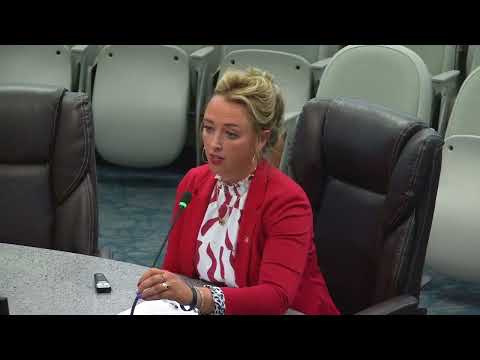
City and county elected officials and CSAC members met at a June 1 Pueblo City Council work session to review a proposed overhaul of the Community Support Advisory Committee (CSAC) application and scoring rubric for the 2027 funding cycle.
Melissa Cook, director of housing and citizen services, said changing application rules or the intergovernmental agreement (IGA) between city and county would likely delay the application opening from July 1 to Aug. 1 to accommodate legal review and two city readings. "If there are changes, that means that we have to update the intergovernmental agreement between the city and the county," Cook said.
Councilor Dante and other presenters outlined a rubric that emphasizes a data-driven statement of local need, measurable outcomes, program design, return on investment, collaboration (and reduction of duplication), organizational capacity and long-term sustainability. They proposed converting the existing small-point system into percentage scoring to give CSAC more differentiation among applicants.
County Commissioner Paula McVitters and Commissioner Miles Lucero, among others, urged clarity about whether the city and county should provide formal priorities (for example, youth or homelessness) or instead offer informal guidance and let CSAC exercise judgment. "We just want some guidance so that they can go through their process," McVitters said. CSAC Chair Gina Lopez Ferguson responded that commissioners' priorities make it easier for CSAC to make defensible recommendations and reduce later questions when council or county members object to awards.
Some councilors warned against what they called micromanagement of the citizen commissioners. One councilor said the CSAC process historically has worked well and cautioned against excessive interference. Others pushed for practical changes (caps, eligibility limits, or rotation of priority categories) to increase perceived equity among applicants and avoid repeatedly funding the same organizations.
Council and county members agreed on a practical next step: the council will review the packet at a city work session on June 15 and provide guidance to CSAC ahead of the commission's June 17 meeting. Staff offered to gather council priorities or run a short survey, but several members preferred additional in-person work sessions rather than deciding by email.
No formal changes to the CSAC IGA or rubric were adopted at the work session; the conversation was framed as initial feedback to inform subsequent work and the June 17 CSAC meeting.