Get Full Government Meeting Transcripts, Videos, & Alerts Forever!
Get email alerts on the Point Of Sale Ordinance topic
No spam. Unsubscribe anytime.
Homeowners and realtors press Austin City Council to address point-of-sale sewer inspection rule
Summary
Homeowners and industry representatives told the Austin City Council the new point-of-sale sewer inspection ordinance is causing delayed closings and financial hardship; city staff presented inspection stats and the council agreed to reconvene a work group to consider implementation fixes and outreach.
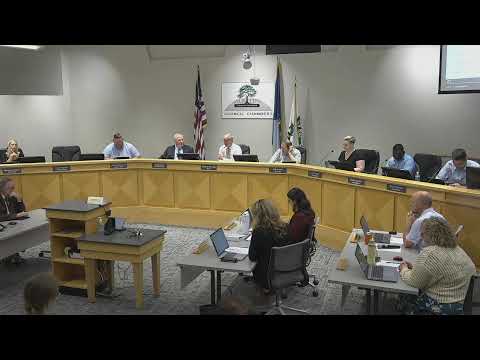
At a council meeting (date not specified in the transcript), residents and real estate industry representatives urged the Austin City Council to address implementation problems stemming from a new point-of-sale sewer inspection ordinance that took effect this spring.
Heather Dobak, a homeowner, told the council she inherited a house and said the ordinance’s new requirement for a full sewer inspection with camera footage forced her to pay roughly $700 for inspections and about $4,800 for initial cleanup and repairs after a failed inspection. "This ordinance has caused me severe financial and mental hardship," Dobak said, asking the council to review the hardship impacts, accept prior inspections where appropriate and establish grant assistance for mandatory repairs.
Lenders and realtors who spoke said closings have delayed or fallen apart. Lender Chris Heuchel described lenders and realtors scrambling to handle turnaround times and urged the council to reconvene the earlier work session to address implementation glitches.
City staff (Steven Lang) responded with program statistics from the first months of implementation: the city had conducted roughly 196–197 inspections, with about 85% turned around in six days or less, 65% passing, 19% failing and 15% incomplete. Lang said the primary causes of failures are illicit clean-water connections entering the wastewater system and structural failures such as offset joints, not roots.
Several council members and speakers recommended reassembling the ordinance work group sooner than a six‑month review period to troubleshoot problems such as a queue/prioritization process for closings and whether additional staff or vendor support is needed. Realtors asked the city to consider a priority review for cases with imminent closings and to publish a simple status tracker so agents, lenders and sellers can see where an inspection stands.
Council members did not adopt any immediate changes to the ordinance at the meeting but directed staff to explore options for an earlier work session, improved communication tools, and possible temporary staffing or vendor support to speed reviews. Chair (speaker 4) said the council wanted more information before moving to ordinance changes and emphasized balancing implementation time with residents’ hardships.
The council’s next procedural step, per comments at the meeting, is to convene the work group and report back to the council with options for process changes and potential funding or staffing solutions.