Get Full Government Meeting Transcripts, Videos, & Alerts Forever!
Get email alerts on the Transmission Project Marl topic
No spam. Unsubscribe anytime.
Hampshire County residents tell PSC: deny NextEras Mid-Atlantic resiliency transmission proposal
Summary
Dozens of residents told the West Virginia Public Service Commission in Romney that NextEra Energy Transmissions proposed Mid-Atlantic resiliency link (case 260075) will not benefit local communities, urging commissioners to reject the certificate because of eminent domain, environmental harm and uncertain costs.
The Public Service Commission of West Virginia heard more than three dozen public comments in Romney as residents urged commissioners to reject NextEra Energy Transmission Mid-Atlantic Inc.s application (case no. 260075) for a certificate of public convenience and necessity for a proposed 107-mile transmission corridor through West Virginia.
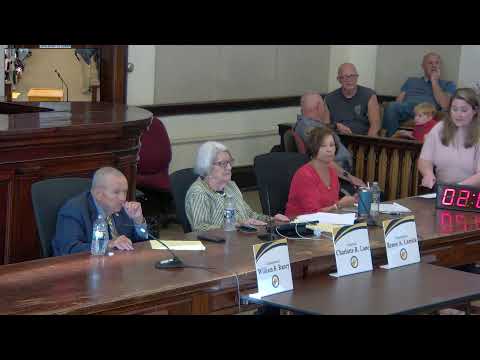
At a public comment hearing chaired by Charlotte Lane, residents and local officials said the project would impose permanent changes on family farms, fragment forests and offer little direct benefit to local customers. "These dreams could become far less certain," said Caitlin Hanlon, who told the commission her familys 45-acre homestead has been in three generations and could lose acres to the line. Delegate Hillenbrand framed the central questions for the commission: who benefits, whether the need has been demonstrated and whether eminent domain is appropriate for a project that appears to supply customers outside West Virginia.
Why it matters: Speakers repeatedly said the Mid-Atlantic resiliency link appears designed to move power to data centers in Northern Virginia and other out-of-state customers while West Virginia ratepayers would shoulder construction and reliability costs. Several commenters cited cost estimates in public discussion exceeding $1 billion and said the applicant had not provided a state-by-state breakdown of how costs would affect West Virginia households.
Residents described both environmental and personal harms. Peter Wood and others raised watershed and wood thrush habitat concerns; George Constance highlighted that wood thrush populations have declined substantially and said forest fragmentation harms breeding birds. Commenters also described repeated interactions with utility crews on private land, herbicide spraying and fence damage. "If Virginia wants this power, let them pay for it," said Ronald Faggioli, who described two existing lines already running through his property.
Not all testimony opposed the project. Ryan Culhane, representing All Construction Group, a veteran-owned union heavy-civil contractor, urged the commission to consider job creation, local spending and long-term tax revenues from construction, and asked the developer to ensure local hiring. Counsel for the applicant, Chris Callas of Jackson Kelly, introduced NEET MA representatives present but the hearing was reserved for public comment, not cross-examination.
Speakers also urged that alternatives be fully evaluated, including undergrounding, using existing corridors with taller towers and additional conductors, dynamic line ratings, and distributed energy resources. Karen Newman and others questioned PJM market dynamics and whether the transmission path would primarily enable exports rather than local reliability improvements.
Next steps: Chair Lane reminded attendees the evidentiary hearing on the application will be held in Charleston beginning Oct. 26 (continuing Nov. 2) at PSC offices, and that written comments remain open on the PSC docket (www.psc.state.wv.us). Representatives from NextEra, PSC staff and the consumer advocate remained after the hearing to answer questions.
The hearing provided a detailed record of local opposition focused on property rights, environmental impacts and cost allocation; the PSC will consider those comments along with the evidentiary record in Charleston before deciding whether to grant the certificate.