Get Full Government Meeting Transcripts, Videos, & Alerts Forever!
Get email alerts on the Housing topic
No spam. Unsubscribe anytime.
Residents and advocates urge higher developer fee and more after-school funding; council advances feasibility study on longer payment plans
Summary
Callers backed raising the developer fee from 3% to 5% for the Housing Trust Fund and urged prioritizing after-school and summer programs; the council approved a request for a feasibility report on adding a 35-year payment option for private-street conversions.
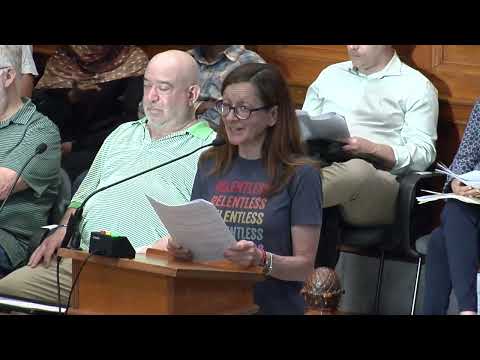
Multiple callers and local advocates used the public-participation period to press the City Council on two distinct but recurrent themes: boosting affordable-housing funding and expanding affordable after-school and summer programs.
Echo Louisant Collins and others urged increasing the fee paid by developers to the city’s Housing Trust Fund from the current 3% to 5%, arguing the small percentage increase would materially increase resources for building affordable units and help meet the city’s goal of more housing by 2034. "Increasing this from 3% to 5% will either increase the trust fund or make it so they're choosing... to build the affordable units," Collins said.
Speakers including Shakora Baldwin, Anne Buro and Louis Darden described after-school and summer care as essential child-care infrastructure that supports working families, reduces youth violence and provides academic and social supports. Ruby Pazzanetti, chief operating officer of the Edward M. Kennedy Community Health Center, asked the council to refer item 7b (a zoning amendment to encompass specified Kennedy Health Center properties in a business-limited district) to the planning board; the council approved that referral.
On private-street financing, callers asked for longer-term payment options for abutters facing assessments tied to conversions. The council adopted item 12e (as amended) requesting the city manager, the DPW commissioner and the CFO to study whether 35-year payment terms could be offered in addition to the current 10- and 20-year plans.
What happens next: The administration will prepare a feasibility report on a 35-year payment option for private-street conversions and the planning board will receive the Kennedy Health Center zoning referral for review. Advocacy for the 5% developer fee and after-school funding is likely to reappear at committee and budget deliberations.