Get Full Government Meeting Transcripts, Videos, & Alerts Forever!
Get email alerts on the Police Headquarters Purchase topic
No spam. Unsubscribe anytime.
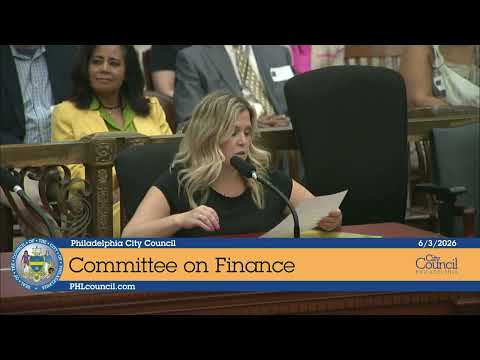
Finance committee reports bill authorizing bonds to buy police headquarters after debate over price and rent
Summary
The Committee on Finance voted to report bill 260,509 authorizing the Philadelphia Municipal Authority and city to issue bonds (not to exceed $225 million) to exercise a one‑time purchase option on the police headquarters at 400 North Broad and an associated garage; testimony outlined an estimated borrowing of about $201 million and a conflicted appraisal/rent history that drew sharp questions from council members.
The Committee on Finance voted to report bill 260,509 with a favorable recommendation, authorizing the Philadelphia Municipal Authority and the city to issue bonds to fund exercise of a one‑time purchase option for the police headquarters at 400 North Broad and the attached garage.
City Treasurer Jackie Dunn and deputy treasurer for debt Matthew Bowman said the ordinance would authorize up to $225 million in bonds and that the administration estimates the transaction will borrow approximately $201 million to pay the remaining debt on the facility and related issuance costs. Bowman said the bonds would be secured under a service‑agreement structure and that the city is conducting due diligence on the property’s appraisal.
Why it matters: committee members pressed for context about how the purchase price relates to appraised value and past rent payments. Treasurer’s office testimony noted the purchase option formula (established in the 2017 sublease) requires the city to pay the higher of outstanding debt or appraised value; Bowman reported an appraisal figure for 400 North Broad of about $21.5 million while stating the outstanding debt figure that governs the formula is far larger and is driving the purchase amount.
Council members asked how the authorization would be repaid and whether buying is cheaper than continuing to lease. Dunn and Bowman said the debt service — estimated in committee testimony at roughly $15.1 million annually — would be paid through class 200 sinking‑fund appropriations under the service agreement, and that continuing to rent under the lease‑reset scenario would raise annual rent to an estimated $29 million beginning in 2027. That difference shaped the administration’s recommendation to pursue the lower‑cost option of exercising the purchase option now.
Councilmember Young asked for a clear explanation of the source of repayment and of whether the bonds would be negotiated or competitively sold; Bowman said a negotiated sale is expected. Several members, including Councilmember Jones, pressed broader budget priorities, noting trade‑offs for capital spending elsewhere in the city.
Direct quotes: "This purchase option was built into the sublease in December 2017," said Jackie Dunn, city treasurer. Councilmember Jones said of the past structure, "We got took," and urged scrutiny of how the city arrived at the current deal.
What the committee did: the committee voted to report bill 260,509 from committee with a favorable recommendation and requested suspension of the rules to permit first reading at the next council session. The motion to report the bill was moved and seconded on the record and carried.
Next steps: the ordinance will move to first reading; council members requested further detail on appraisals and the service‑agreement mechanics as the measure advances.