Get Full Government Meeting Transcripts, Videos, & Alerts Forever!
Get email alerts on the School Budget topic
No spam. Unsubscribe anytime.
Stonington officials present $48.3 million school budget; district seeks more special‑education and multilingual supports
Summary
Stonington Public Schools presented a $48.3 million operating budget — a 5.82% increase — asking for new staff and services to address rising English‑learner and special‑education needs, plus several program and maintenance funding lines.
Stonington school leaders on Thursday presented a proposed $48,300,000 operating budget for fiscal 2026–27, a 5.82% increase from the current year, and sought funding for new instructional and student‑support positions aimed at rising special‑education and English‑learner needs.
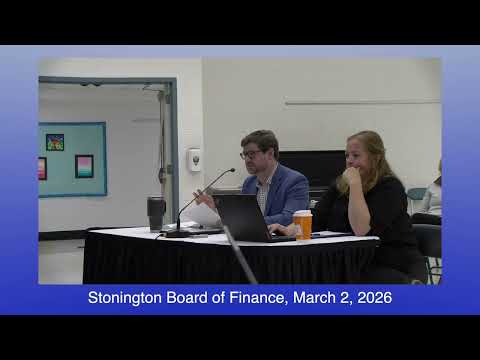
Alicia Stripling, the district’s director of finance and personnel, told the Board of Finance the total request reflects both mandatory costs and targeted additions. "The total request is for a $48,300,000 budget, and that is a 5.82% increase over last year's," Stripling said, walking members through the budget development process and the cost drivers — notably salaries and benefits, transportation contract increases, and special‑education placements.
The presentation asked board members to consider several staffing increases and program investments that the district said are driven by recent enrollment changes and student needs. District staff recommended converting a 29‑hour tutor position into a full‑time English‑learner specialist (a fully loaded FTE cost estimated at about $97,000) to provide coaching, direct instruction and district‑wide support. The district also proposed adding speech pathology hours, behavior‑support specialists and an additional preschool teacher to strengthen early intervention.
The district’s special‑education leader described a rapid uptick in early referrals and students requiring intensive services. The staff emphasized that keeping students in district where feasible requires both additional personnel and appropriate space: "To create your own programs, you need the supports and space to make that happen," the special‑education director said, urging the committee to consider preschool and early‑intervention investments that can reduce more costly out‑of‑district placements later.
Board members probed the staffing proposals and class‑size impacts. Stripling said the budget package includes iterations that reflect maintained services and targeted improvement requests: some positions (for example pre‑K staffing) appear in the maintained‑services baseline, while other additions are presented as enhancements. She also described the district’s approach to enrollment projections (using the state’s Oct. 1 count and an internal June 1 update) and noted a 10‑year net decline of about 436 students across the district.
On special‑education costs, staff said state proposals and rising out‑of‑district tuition can make planning difficult and stressed that the board should consider strategic investments that could keep more students in‑district. Members asked for follow‑up data on magnet, private and homeschooled students to better understand enrollment dynamics and long‑term trends.
The board did not take final action on the operating budget at the meeting; presenters said staff would provide more detailed back‑up, responses to specific questions on class sizes and projected locations for any added positions before deliberations.
Provenance: topicintro SEG 2092; topfinish SEG 4390.