Get Full Government Meeting Transcripts, Videos, & Alerts Forever!
Get email alerts on the Kratom Regulation topic
No spam. Unsubscribe anytime.
Normal council approves ordinance banning sale and distribution of kratom
Summary
After public testimony both for and against, the Normal Town Council voted to prohibit the sale and distribution of kratom within town limits, keeping possession legal. Council members cited product safety concerns, enforcement limits and unsettled state regulation during debate.
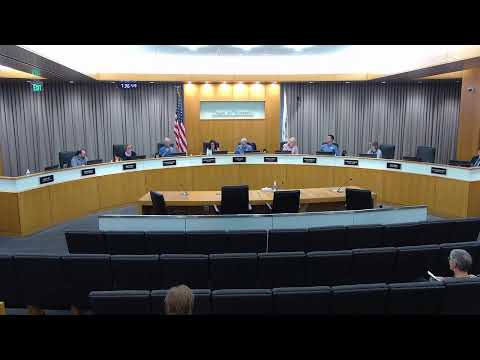
Normal, Ill. — The Normal Town Council voted to approve an ordinance prohibiting the sale and distribution of kratom within the town on June 1, following hours of public comment and a staff briefing on enforcement challenges.
Supporters and opponents made competing arguments during the public-comment period. Cindy Charlebois said kratom had allowed her to stop prescription painkillers and improved her quality of life, and she urged regulation rather than an immediate ban. “Kratom has been wonderful for me and my husband,” Charlebois said, adding that the Illinois General Assembly is considering the Illinois Kratom Consumer Protection Act (HB 4737), which would give the Department of Revenue authority to set testing and enforcement rules with an effective date of Jan. 1, 2027.
Other commenters described different experiences. Sarah McManus told the council she has seen people addicted to a synthetic, candylike product she called “hydroxy 7,” and she urged that such items be removed from store shelves. “It is absolutely dangerous, and it has to not be available,” McManus said. Victor Connor and Michael Dion also spoke: Connor described relief from natural kratom for chronic back pain, while Dion described the products sold at convenience stores as inconsistently labeled and risky.
City staff briefed the council on the limits of local enforcement. Mr. Day, who coordinated the city's research on the topic, said distinguishing between naturally occurring kratom leaf and enhanced or concentrated products would be difficult for local authorities because that determination requires laboratory analysis not available to the town. He said the state legislature considered several kratom bills during the recent session, including proposals that would have banned all kratom products; none became law, and one earlier bill that would have set ingredient limits did not advance out of committee.
Council members weighed those enforcement obstacles against reports of addiction and safety concerns. One council member emphasized that the proposed Normal ordinance is narrower than Bloomington's, noting that Normal's version prohibits sale but does not criminalize possession. Another cited medical guidance showing increases in kratom use nationally and reports of withdrawal-like symptoms among some users.
After deliberation, the council approved the ordinance by roll call. The ordinance forbids retail sales and distribution of kratom in Normal; it does not assess penalties for possession by residents. The council's vote was recorded as unanimous in favor.
The council's action follows recent steps by neighboring Bloomington and a wave of public requests and emails the city said prompted the agenda item. The ordinance takes effect under the town's standard local procedures; staff did not specify an implementation date during the discussion.
The council also approved other items on the agenda, including a boundary modification to the Bloomington-Normal Enterprise Zone and routine consent items.
What's next: The ordinance limits local commercial availability but leaves possession unchanged; any future changes that would regulate ingredients or approve lab-based testing would likely depend on state-level action or new local implementation details.