Get Full Government Meeting Transcripts, Videos, & Alerts Forever!
Get email alerts on the Zoning Regulations topic
No spam. Unsubscribe anytime.
Zoning Board of Appeals reviews Part 2 of proposed zoning regulations, flags floodplain and definition issues
Summary
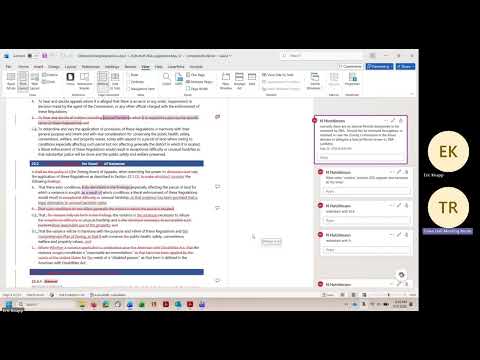
At a June 6 special meeting, the Zoning Board of Appeals reviewed Chapter 22 and related sections of the draft zoning regulations, recommending clearer variance findings, consolidation of definitions, tighter flood‑zone language (including raising freeboard to two feet), and clarified rules for nonconforming lots and decks. No substantive policy vote was taken; staff will send comments to the Zoning Commission.
The Zoning Board of Appeals met in special session on June 6 to continue its review of Part 2 of the town's proposed zoning regulations, focusing on the board’s chapter, several definition sections, and floodplain rules.
The board, chaired by the meeting host, opened by saying the objective was to streamline Chapter 22 (the ZBA chapter) and to separate substantive findings from procedural text so the rules better reflect current case law. “So anyway, so this whole section, I think we can take out,” the chair said when discussing a redundant passage the group recommended moving into the FEMA/floodplain section.
Board members and staff spent the bulk of the meeting on three substantive areas: (1) variance findings and procedures, (2) the structure and placement of definitions, and (3) floodplain/coastal site provisions. On variances, members asked that the draft emphasize the traditional unusual‑hardship test and explicitly note reasonable accommodation for disabled persons as part of the analysis; staff said the changes are intended to align the regulations with recent case law.
The group debated whether FEMA‑specific guidance belongs inside the ZBA chapter or should be consolidated under the floodplain/FEMA overlay (chapter 13). Staff recommended keeping FEMA technical requirements in the FEMA section and cross‑referencing them from Chapter 22; the board agreed that would reduce redundancy and the risk of inconsistent enforcement.
Definitions were another major theme. Several members argued that splitting “terminology” and “use definitions” across separate chapters makes the code harder for the public to use, and proposed either consolidating building/structure definitions into one chapter or clearly cross‑referencing the two sections. One member said the redundancy led to errors in practice and confusion for applicants and staff.
Measurement rules drew sustained attention. Members described recurring cases in which attic or roof framing language has been interpreted in ways that exclude space from floor‑area calculations; the board asked staff to define roof structural elements more clearly so owners cannot avoid counting living area by manipulating interior ceiling or rafter positions. Richard Forsmeyer, a member who joined discussion mid‑meeting, described not being present for the prior review but supported clarification of measurement methods.
Floodplain rules were a second technical priority. The board discussed increasing the freeboard requirement in coastal flood zones (members suggested raising the town standard from 1 foot to 2 feet above base flood elevation) and tightening language to limit increases in living space within flood hazard areas. The board heard that some FEMA/DEEP language is a state minimum and that the town could adopt more stringent requirements but may need DEEP coordination for changes that alter the state template.
Members also raised practical jurisdiction issues: changes that increase bedroom counts can trigger Water Pollution Control Authority (WPCA) review for sewer capacity and connection requirements, so the board recommended a cross‑reference directing applicants to secure WPCA approval where applicable. The group noted repeated enforcement problems with houses claimed as having 'breakaway walls' that later were finished in ways that would void flood insurance; the board urged clearer language to discourage conversions that would make enclosed ground floors habitable.
On nonconforming lots and structures, members sought clearer merger and restoration rules so applicants and staff apply a consistent test for contiguous nonconforming parcels. The board debated whether some expansions should require both a variance and a special permit (or CAM review for coastal applications) and asked staff to propose language that avoids inconsistent outcomes.
No substantive policy decisions were adopted at the meeting. Staff will draft a brief memo summarizing the board’s suggested edits and send the tracked‑change file and comments to the Zoning Commission and, where required, to DEEP or FEMA for review. The meeting adjourned by unanimous vote, 5–0–0.
The Zoning Commission is expected to receive the board’s consolidated comments and decide which suggestions to adopt or forward to state reviewers.