Get Full Government Meeting Transcripts, Videos, & Alerts Forever!
Get email alerts on the Land Use topic
No spam. Unsubscribe anytime.
West Sacramento planning commission continues Rose Liquor redevelopment to get police data on single‑can sales
Summary
The Planning Commission continued a conditional use permit for a proposed Rose Liquor redevelopment after debate over conditions that would limit single‑unit alcohol sales and container sizes; staff said police cited single‑unit sales as a citywide concern, while the applicant and attorney said the store has no history of recurring crime at its address.
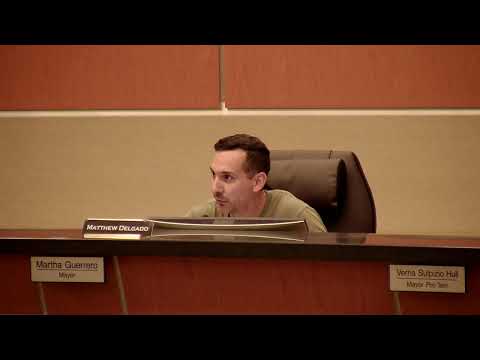
The West Sacramento Planning Commission on June 4 continued consideration of a conditional use permit for Rose Liquor at 1091 Jefferson Boulevard to the commission’s next regularly scheduled meeting so the police department can provide supporting data for staff’s recommended conditions.
Elijah Ortega, the city’s associate planner, told commissioners staff recommended approval of the redevelopment and accompanying permits — a parking reduction to four stalls, an exception to refuse enclosure location, a reduction in commercial building transparency and certification of a CEQA exemption — with conditions aimed at “preventing and dissuading criminal activity,” improving lighting and landscaping and minimizing negative impacts of increased alcohol sales.
The most contested conditions (numbered in staff materials as 18, 19, 20 and 22) would restrict sales of single‑unit alcoholic beverages by imposing minimum package sizes or requiring that certain products be sold only in multi‑unit manufacturer packages. Ortega said the restrictions were crafted in response to feedback from the police department and would include a one‑year review of the CUP after certificate of occupancy so staff and the police chief can recommend adjustments if problems arise.
Pete Tobin, the consultant for the applicant, and Noah Phillips, the applicant’s attorney, said the rebuilt store would increase visibility and security — with storefront glass, adjusted shelving and cashier sightlines — and argued the business has no pattern of crime at its address. Phillips said the police department “determined that the business did not have a history of recurring criminal activity, panhandling or loitering” and asked the commission to modify or remove the single‑sales conditions.
Representatives for Bro’s Liquor, which has operated at the site since at least 1972, told commissioners the proposed expansion would make the store more of a neighborhood market and that prohibiting small single sales could undercut the economic basis of the investment. One owner described the store as a family operation and said that forcing customers to buy multi‑packs would drive them to other nearby outlets.
Staff and commissioners debated two lines of concern: the city’s long‑standing approach of imposing single‑sale limits based on police input, and fairness to a long‑standing, legal nonconforming business seeking to redevelop. Staff noted that police call‑for‑service logs do not always capture alcohol‑specific details and that, in other recent cases, the city has conditioned new or transferred licenses on similar restrictions. Some commissioners said they were reluctant to adopt conditions without seeing site‑specific data; one commissioner said peer‑reviewed studies show mixed evidence about single‑unit restrictions and asked for the studies to be made available.
After discussion, Commissioner (speaker 2) moved to continue the item to the commission’s next regularly scheduled meeting to allow staff to obtain police information and to let commissioners review the research cited; Commissioner (speaker 4) seconded the motion. The motion carried by roll call vote (five ayes). The chair asked that the police department appear with supporting data at the continued hearing.
Next steps: the commission continued the Rose Liquor CUP to its next regular meeting and requested police department evidence underlying the recommended single‑sales conditions. Staff noted there is a one‑year CUP review condition in the staff recommendation that would allow reexamination of conditions after the store opens.