Get Full Government Meeting Transcripts, Videos, & Alerts Forever!
Get email alerts on the Stormwater Draining topic
No spam. Unsubscribe anytime.
Residents urge Norton City Council to act on repeated Hillcrest-area flooding after GPD study
Summary
Residents described recurring, dangerous runoff through the Hillcrest watershed and asked the council to pursue retention‑pond and grant strategies identified in a GPD drainage study; council members discussed funding, storm‑event design standards and next steps.
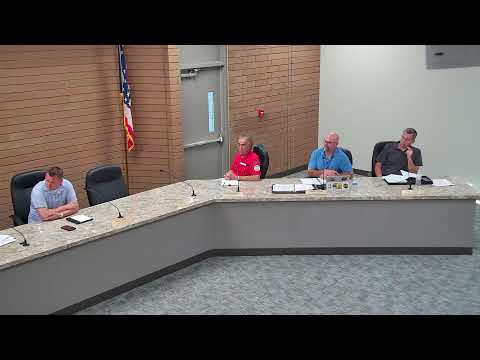
Residents and council members pressed Norton City Council on Monday about long‑standing flooding in the Hillcrest watershed and next steps after a GPD drainage study.
Dan 1st, who identified himself during public comment, told the council that heavy runoff through his yard makes it unsafe for his young children and urged action. "I've got a 4 year old ... the amount of water that comes through anytime it rains is just not safe at all for the kids," he said.
Paul Gregg, who said he has walked through flooded areas with boots "up to our knees," showed photos he said document water flowing through a culvert under I‑76 and into neighborhood lots. Gregg said the problem has worsened since nearby developments were built and blamed blocked crossings and decomposed railroad ties under the highway. He asked to meet with the city administrator to provide local history and evidence.
The council and staff reviewed options in the 44‑page GPD report, which members characterized as providing several remediation options ranging from smaller fixes to retention ponds sized for larger storm events. Council members debated designing to a 25‑, 50‑ or 100‑year storm standard and weighed cost versus benefit. "If you did it for 25, we'd be foolish," a council member said, arguing for a larger design standard.
Council discussion repeatedly returned to funding. Members noted limited city resources, discussed setting aside roughly $300,000 per year, and said a project could be structured to proceed only with grant support. One council member said the study includes cost estimates and suggested contacting a landowner (identified in the meeting as Mr. Gaynor) who might offer land for a retention pond.
The council did not take formal action on the drainage recommendations at the meeting but agreed to continue stormwater conversations at upcoming sessions and pursue next steps, including speaking with property owners and investigating grant opportunities.
The council also noted the broader scale of the watershed — several council members cited different acreages in discussion (comments referenced about 130 acres and another reference to 178 acres) — and said additional studies and funding analysis will be required to scope any construction.
The council scheduled continued stormwater discussion for its June 15 meeting.