Get Full Government Meeting Transcripts, Videos, & Alerts Forever!
Get email alerts on the Meeting Process And Transparency topic
No spam. Unsubscribe anytime.
Residents push back as late-added $400,000 road borrowing draws transparency objections
Summary
Several residents questioned the late addition of a $400,000 borrowing resolution and raised broader transparency concerns as the meeting debated capital priorities for roads versus paying down debt. The assembly voted to add and later adopt the borrowing resolution after extended discussion.
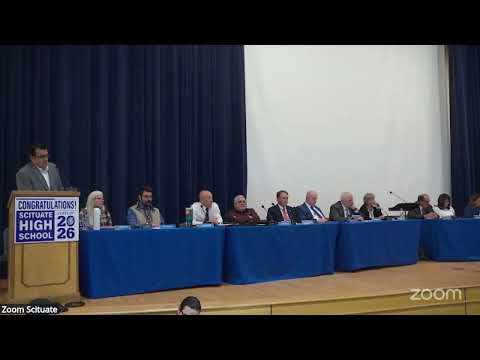
Scituate — The June 2 financial town meeting featured a sustained debate over process and notice after the assembly voted to add a fifth resolution authorizing up to $400,000 in borrowing for road, bridge and sidewalk work.
Richard Finnegan, a longtime resident, told the assembly he was concerned that the town was "blindsiding the taxpayers" by adding a borrowing resolution after the budget brochure had been mailed; he pressed whether the town council had itself voted on the resolution before bringing it to the electorate. "Resolutions are voted by the town council," Finnegan said, arguing the late insertion reduced transparency.
Michael Marcello echoed that concern and called the action "hypocrisy" given pending state legislation he said seeks to restrict last-minute moves; the moderator and other officials responded that the full text of the resolutions was posted in the warrant in accordance with state law and that the motion at that moment was only to add the item to the agenda for later consideration.
Effie McAvoy and other voters framed the dispute around the authority of the financial town meeting versus the town council: McAvoy said the electorate retains the power to approve expenditure decisions when assembled. The moderator agreed he would read the full resolution text aloud and allow discussion; the assembly then voted to add resolution 5 to the agenda and later adopted it.
Proponents, including the town official who presented the proposal, said the borrowing represented a time-sensitive opportunity: the town could borrow $400,000 and receive roughly $125,000–$130,000 in reimbursement from the Department of Transportation or other state sources if projects met program requirements. "Rather than miss this opportunity, I wanted to present this to the voters," the official said.
Opponents warned that moving money into additional paving while significant debt-service costs already exist risked putting off long-term fiscal prudence. A separate motion to reduce the general capital projects line by $250,000 (with a proposed restriction that school capital remain untouched) drew lengthy debate and ultimately failed by voice vote.
The assembly’s decisions: the motion to add resolution 5 to the agenda passed by voice vote; resolution 5 was later read in full and adopted by the assembly. The meeting then proceeded to read and adopt the remaining warrant resolutions and adjourned.
The record shows the debate was focused less on the technical terms of the borrowing and more on notice and democratic process; several residents asked that future budget committee hearings and warrant postings be more accessible to the public.
The town clerk’s office and the moderator said the legal posting requirements were met; some residents said the documents were harder to find on the town website than they should be and urged improved distribution in future cycles.