Get Full Government Meeting Transcripts, Videos, & Alerts Forever!
Get email alerts on the Housing Affordable topic
No spam. Unsubscribe anytime.
Cambria board grants 3‑year extension for Cambria Pines affordable housing project
Summary
The Cambria Community Services District unanimously approved a 36‑month extension of an intent‑to‑serve water letter for People’s Self‑Help Housing’s 33‑unit Cambria Pines project after developers described a $28 million plan and recent $7 million HCD grant; the measure spares the nonprofit immediate capacity fees until construction readiness.
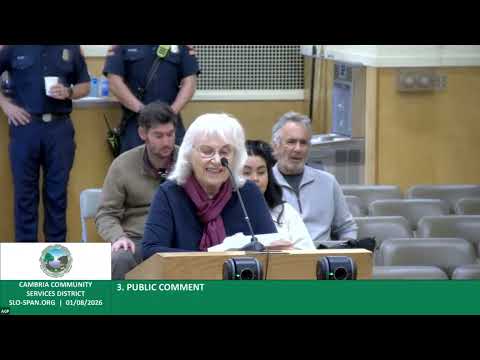
The Cambria Community Services District on Jan. 8 approved a 36‑month extension of a water “intent‑to‑serve” letter for People’s Self‑Help Housing’s Cambria Pines affordable housing project on Schoolhouse Lane.
Juliana Gallardo Wilkie, associate director and project lead for People’s Self‑Help Housing, told the board the proposal is for a 33‑unit development with a community center and about 2.83 acres of preserved open space. She said the project has building permits that expire in November 2027 and that the last step to break ground is securing tax‑credit financing. “We respectfully request the approval of the water intent to serve letter for 24 months,” Gallardo Wilkie said, noting the organization planned to reapply for both the 4% and 9% tax‑credit rounds this year.
Why it mattered: the board’s extension gives the nonprofit more time to assemble financing without forcing it to immediately pay large capacity fees or install infrastructure before financing is secured. General manager McElhaney told directors the district could extend intent‑to‑serve letters for up to three years under its rules.
Developers and staff said the project recently received a $7,000,000 grant from the California Department of Housing and Community Development that improves the project’s competitiveness for tax credits. Gallardo Wilkie later revised an earlier cost estimate, saying the total development cost is about $28,000,000.
Board and community reaction ranged from supportive to cautious. Some speakers urged the board to back housing that serves local workers; others questioned whether motel conversions or smaller infill projects could be cheaper. Resident Gary Boyle raised concerns about water and sewer capacity and argued in favor of protecting community open space. People’s Self‑Help noted that state and federal funding requirements and prevailing‑wage rules affect construction costs.
Motion and vote: Vice President Dean moved to grant a three‑year (36‑month) extension. Director Gray seconded; a roll‑call vote recorded aye votes from Directors Dean, Gray, Scott, Thomas and President Farmer and the motion passed unanimously.
Next steps: Staff said a connection permit will be issued and capacity fees will be collected when the developer is ready to apply for a connection permit and break ground; until that point the extension preserves the developer’s ability to pursue financing. Gallardo Wilkie offered to provide the board with additional handouts explaining tax‑credit mechanics and projected tenant rent levels tied to state AMI bands.