Get Full Government Meeting Transcripts, Videos, & Alerts Forever!
Get email alerts on the Overdose Prevention ORCA topic
No spam. Unsubscribe anytime.
Seattle public‑health briefings highlight decline in overdoses and ORCA Center treatment starts
Summary
Public Health Seattle King County, the city's Human Services Department and DESC told the committee that overdose deaths peaked in 2023 and have since declined; DESC's ORCA Center reported 451 post‑overdose patients served, nearly 8,000 encounters across center and pod, 713 unique clients started on MOUD and 380 started monthly long‑acting injectable buprenorphine.
Public Health Seattle King County, the City of Seattle Human Services Department (HSD) and DESC briefed the Human Services, Labor and Economic Development Committee on June 5 about local overdose trends and low‑barrier treatment efforts, including the ORCA (Opioid Recovery and Care Access) program.
Brad Feingood of Public Health told the committee that overdose deaths rose sharply between 2018 and 2023, reaching more than 1,300 countywide in 2023 and that fentanyl was involved in the majority of those deaths. He said the county and Seattle are now seeing declines: Seattle has experienced a roughly 44% reduction in overdose deaths over the past two years and the county reported a roughly 30% decline in the first five months of 2026.
HSD said it is investing over $35 million in public‑health efforts in 2026, with roughly $13.6 million (39% of that portfolio) directed to overdose prevention and SUD treatment programs, including naloxone distribution, post‑overdose stabilization, low‑barrier medications for opioid use disorder (MOUD) access, and inpatient treatment supports.
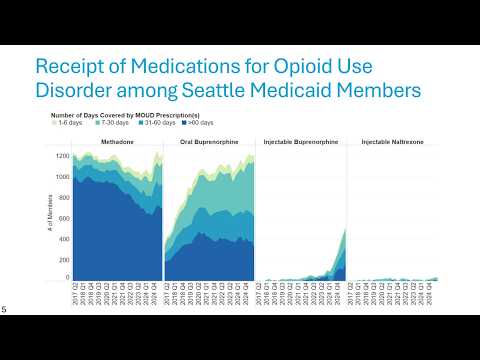
DESC described the ORCA Center, a 24/7 post‑overdose stabilization and same‑day MOUD access site at 515 3rd Avenue, and the ORCA Pod outreach team that brings clinical care to shelters and permanent supportive housing. Rachel Marhill of DESC said the ORCA Center opened in September 2025; DESC reported 451 post‑overdose patients served, nearly 8,000 encounters across the center and pod, 713 unique clients started on MOUD and 380 clients started monthly long‑acting injectable buprenorphine.
Dr. Caitlin Fokley, an addiction medicine physician and ORCA clinical lead, explained clinical challenges when initiating buprenorphine for people using fentanyl, including the risk of precipitated withdrawal, and described strategies (microdosing and staged injectable regimens) used at ORCA to improve initiation and retention. Committee members asked how the city can scale successful elements; presenters said capacity and medication cost (and Medicaid coverage) remain constraints and pointed to the importance of linked shelter and outreach services.
The committee adjourned due to quorum constraints with a request to continue the conversation at a later meeting.