Get Full Government Meeting Transcripts, Videos, & Alerts Forever!
Get email alerts on the Economic Development topic
No spam. Unsubscribe anytime.
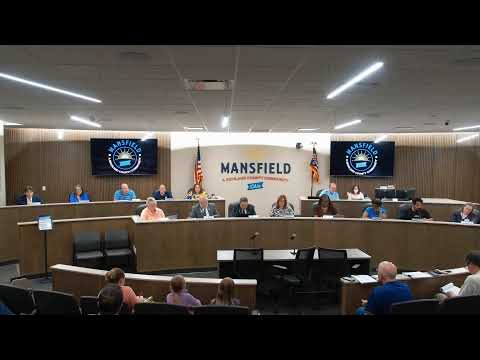
Mansfield council approves Buc‑ee's development deal using temporary 2% sales‑type charge to repay infrastructure
Summary
By an 8–0 vote, Mansfield City Council approved a development agreement with Buc‑ee's that uses a 2% site-specific sales-type charge on nonfuel purchases to repay roughly $15 million in infrastructure work; 1.75% would repay Buc‑ee's costs and 0.25% would remain with the city.
Mansfield City Council voted 8–0 to approve a development agreement with Buc‑ee's Mansfield LLC that authorizes a new community authority to add a temporary 2% sales‑type charge on nonfuel purchases at the Buc‑ee's travel center to repay infrastructure the company will build.
Greg Daniels, the city’s outside counsel who drafted the agreement, told the council the tool allows Buc‑ee's to advance roughly $15 million for public improvements and be repaid over time by an added 2% charge on in‑store sales (not fuel). “The additional sales tax type charge is 2%. One and three quarters of that goes back to Buc‑ee’s to repay them, and a quarter percent stays with the city,” Daniels said.
Mayor and council members framed the structure as a public‑private financing approach that preserves usual property‑tax distributions for schools and other local governments while enabling infrastructure—roundabouts, water, sewer and a new public street—needed for the site. Council member statements acknowledged concerns raised by nearby residents and farmers but said the agreement includes measures meant to limit fiscal impacts on other taxing entities.
Residents urged caution at public comment. Kimberly Herschner, a county resident who identified herself as a Richland County farmer, said she opposes the zoning and raised traffic, safety and farming‑community impacts: “My family does not farm this ground or live directly on this route, but I do stand in solidarity supporting my friends… We are opposed to Buc‑ee’s development with heavy traffic, underground full fuel storage, decreased safety for our families,” she said.
Buc‑ee's representatives described store operations, local‑vendor outreach and staffing plans. Angela Yannick, the company presenter, said typical Buc‑ee's stores staff about 175–225 full‑time employees with starting wages in the $18–$20 range and emphasized the company’s vendor scouting and emergency‑response planning. Scott Ratcliffe, Buc‑ee's director of engineering, said the site plan anticipates three roundabouts and that ODOT traffic approvals are a key step.
Council discussion touched on local hiring and procurement, project timeline and how early repayment would shorten the surcharge period. Daniels said the 1.75% repayment portion expires once Buc‑ee's is fully repaid; the 0.25% city share would remain in place thereafter to support local infrastructure in the area.
The ordinance (bill 26‑111) passed unanimously, 8–0. Council members said they would keep engaging with nearby residents and local trades to mitigate impacts and maximize local benefits.
What’s next: the development agreement is in place; the company said it remains under contract to purchase the property and expects closing-related steps and ODOT approvals to determine construction timing.