Get Full Government Meeting Transcripts, Videos, & Alerts Forever!
Get email alerts on the Emergency Services Fee topic
No spam. Unsubscribe anytime.
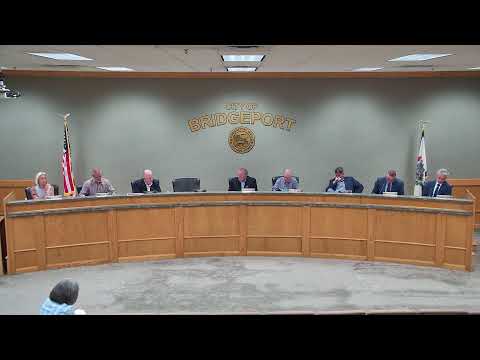
Bridgeport council freezes hotel emergency-services fee increase for one year
Summary
After a lengthy debate about hotel revenue and public-safety workload, the Bridgeport City Council voted to keep the emergency-services fee charged to hotel guests at $3 through June 30, 2027, and directed staff to draft an amendment to make the police department whole during the pause.
The Bridgeport City Council voted to freeze a planned increase in the hotel emergency-services fee, keeping the charge at $3 from July 1, 2026, through June 30, 2027, after a lengthy meeting that mixed hotel-industry pleas, public‑safety data and debate over billing mechanics.
Steve Ludwig, speaking on behalf of the local hotel community, urged the council to repeal or at least pause the fee increase and shared hotel-market data he said show a downturn in occupancy. "Last year we ran, as a city, 77.2%... This April, we ran 71.2%. That means there were 4,626 less occupied rooms in April of this year than last year," Ludwig said, adding his estimate that citywide room revenues were about $378,000 lower year over year. He asked the council to consider alternative collection methods and to enlist the Bridgeport Convention & Visitors Bureau to boost demand.
City Manager (name not provided) summarized staff analysis and revenue detail for council members. He reported that hotels reported $25,669,000 in income over a 12‑month period, which produced about $206,553 in business-and-occupation (B&O) tax revenue attributed to hotels, and explained that hotel-motel (occupancy) tax collections of roughly $1.375 million are split 50/50 with the CVB. The manager also noted that some booking platforms remit the fee and others do not.
Police Chief Mark told the council that public-safety calls tied to hotels have fallen in recent periods but stressed the operational cost of those incidents. "We had 1,445 calls to the hotels since the beginning of 2024… They've gone down — 732 calls for service in 2024; 555 in 2025; and up to date in 2026, it's 198," Chief Mark said, adding that certain incidents (shootings, overdoses, vehicle thefts) require multi-agency responses and lengthy investigations.
Councilors pressed staff on whether the city could structure the charge as an included tax instead of an added fee. City Attorney John warned that the city lacks authority to enact it as a tax and that the current authorization (cited in the meeting as "8 13 13") permits fees for services rendered within city limits, not a general tax.
Council debate centered on proportionality and optics. Councilor Kenny argued the hotels appear to shoulder a larger share of fee revenue relative to the workload hotels create for the fire department and suggested freezing the scheduled increase while staff runs fuller numbers. Councilor Rice proposed a staged schedule for increases but ultimately moved to freeze the ordinance so the council could revisit the matter next year. Councilor Rice's motion kept the fee at $3 through 06/30/2027 and extended the existing department earmarks; Councilor Kenny seconded an amendment to use fund balance/escrow to cover an estimated $300,000 police shortfall during the one‑year freeze.
The council approved the motion by voice vote; the chair declared, "Ayes have it. Motion carries." No roll-call tally was recorded in the meeting transcript.
Next steps: the council directed the city attorney and staff to draft the ordinance amendment reflecting the freeze and the funding approach for the police department and to return it for formal adoption. The council also asked staff to continue exploring alternative collection methods, possible long‑stay exemptions and a marketing update from the CVB.
Ending: The council adjourned after the vote.