Get email alerts on the Cip Response topic
No spam. Unsubscribe anytime.
Joint Facilities Advisory Commission approves CIP response urging joint‑use facilities and flexibility in school projects
Summary
The Joint Facilities Advisory Commission approved a joint letter responding to APS and county CIPs that encourages planning for multi‑use, joint‑use facilities, asks APS to refine enrollment forecasting for increased residential density, and recommends evaluating (if financially feasible) a full‑size gym at the Legacy Career Center renovation.
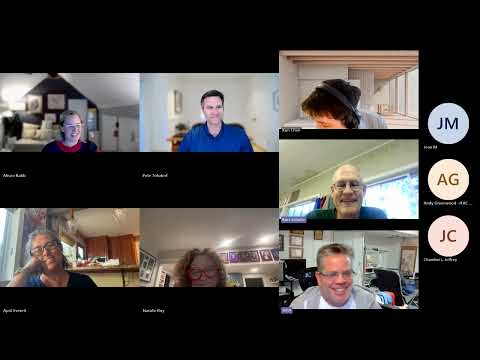
The Joint Facilities Advisory Commission on June 3 approved a joint letter in response to the Arlington Public Schools (APS) and Arlington County capital improvement programs that asks both boards to prioritize multi‑use, jointly managed facilities and to weigh long‑term flexibility when setting project scope.
The letter — finalized in the meeting after collaborative, line‑by‑line edits — specifically calls on APS to "ensure budgetary constraints are balanced with future and potential near‑term community uses, including a full size basketball court in the project," language the commission crafted to cover indoor or outdoor options. Chair Andy (speaker 3) told members the intent was to encourage joint use where feasible rather than prescribe construction details.
Why it matters: JFAC framed the response around preserving options so investments last for decades. Members argued that designing spaces for multiple community and school uses can increase public value and reduce future retrofit costs.
Key recommendations and debate - Legacy Career Center / MPSA renovation: Commissioners discussed whether the renovation should include a full, indoor gym or rely on a smaller indoor space plus an outdoor court. Staff said budget estimates ranged roughly between $41 million (without a full gym) and $45 million (with a gym). Chair Andy urged the commission to support flexible, multi‑use facilities and said he would "spend the extra $5,000,000 to put a one‑time gym in that can be used for, you know, decades" if budgets allowed.
- Infrastructure and financing: Staff described projects such as HVAC and roof work and highlighted alternative delivery and financing options. Staff noted a federal/technical incentive for geothermal systems: "for geothermal systems, through 2031, you can get 40% of the system," which staff said could yield refunds in the range of $5 million to $8 million per project and an estimated ~$18.1 million across three buildings if the measures qualify.
- Boathouse proposal in Rosslyn: Members debated a proposed boathouse that proponents said would centralize high‑school crew, create outdoor‑lab educational opportunities and expand community access to the Potomac. Some members warned about optics and access, with one member saying the project "could be perceived as sort of elite" unless language and planning explicitly prioritized community access and transportation solutions. The commission added text encouraging joint‑use planning and a comprehensive transportation strategy for the boathouse.
- Parks and fields: The commission recommended restoring attention to projects at Virginia Highlands and Williamsburg, noting heavy community demand for lit fields and the high life‑cycle cost of repeatedly replacing worn grass areas.
- Modeling and enrollment forecasts: Members agreed to ask APS to refine enrollment and projection models to account for increased residential density and housing‑policy changes so facility plans remain accurate over the long term.
Action taken The commission voted to approve the joint CIP response letter "as written, with minor updates for clarity." Natalie (speaker 9) moved the approval and a colleague seconded; Chair Andy declared the motion carried and said he would finalize the document and transmit it to the boards. The vote was taken by members signaling affirmation (thumbs‑up); an explicit roll‑call tally was not recorded in the transcript.
What comes next Chair Andy said he would convert the edited document into a word file and send it to members and then forward the letter to the school board and county board. JFAC will reconvene in the fall, with the next meeting set for Sept. 23, 2026.
Reporting note: Quotes and actions in this article are drawn from the June 3 JFAC meeting transcript and the commission's recorded edits. Where numerical estimates and program names were cited in the meeting, the article uses those figures and names as stated by staff and members.
AI generated
The text on this page is AI generated. Summaries, highlights, analysis, and video transcripts are all produced from the original source material.
AI can make mistakes, so if you spot one, and we will fix it for everyone.
Note: the source content is unaltered by us. Any content source we link to, be it a video, an audio recording, or a document, is presented exactly as its publisher released it. That publisher is usually a government body, sometimes an individual official or another organisation.