Get Full Government Meeting Transcripts, Videos, & Alerts Forever!
Get email alerts on the Childcare topic
No spam. Unsubscribe anytime.
Lawmaker opposes HR 77 26, says bill would burden states and child-care providers
Summary
A lawmaker rose in opposition to HR 77 26 on the floor, arguing the bill would not reduce childcare costs or fraud, would triple reporting duties for states, and could lead to punitive debarments that harm families and food access.
A lawmaker rose in opposition to HR 77 26, saying the bill would add reporting burdens for states, fail to lower childcare costs, and risk cutting critical funding for families.
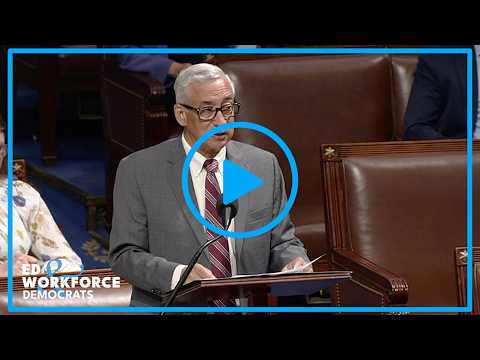
The lawmaker told colleagues, "Mister speaker, I rise in opposition to HR 77 26," and said childcare "is not a luxury, it is a necessity for millions of American families." He added that many communities "struggle with skyrocketing childcare costs" and often cannot find any childcare at all.
The speaker attributed a large economic cost to shortages, saying, "Our economy already loses an estimated $122,000,000,000 every year due to childcare shortages, and that is a policy failure." The lawmaker framed that claim as a reason why Congress should pursue policies that increase supply, lower costs and improve conditions for providers — outcomes he said HR 77 26 would not achieve.
The lawmaker said the bill "does nothing to reduce childcare costs, increase supply, or improve conditions for providers," and warned it would instead "create uncertainty, red tape for states and providers." While saying he supports "efforts to reduce fraud in government programs," he said this bill "doesn't do that."
Citing current federal oversight, the lawmaker noted that states "are already required to report error rates and undergo compliance reviews of the Child Care and Development Block Grant every 3 years." He said HR 77 26 would "require states to triple their reporting obligations, diverting CCDBG dollars away from families by increasing administrative costs," and argued "more reporting does not reduce fraud." Those descriptions and figures were presented by the lawmaker in floor remarks.
The lawmaker also criticized language in the bill that would allow the Health and Human Services secretary to designate states "as high risk" and subject them to additional monitoring without defining what "high risk" or "additional monitoring" would mean, and without providing funding to carry out new responsibilities.
He warned the expanded grounds for noncompliance could be used politically, saying the measure could be "weaponized to withhold funding from an entire state that the Trump administration wants to punish." The lawmaker raised particular concern about a provision he said would mandate "permanent debarment of providers found guilty of fraud regardless of mitigating circumstances," and questioned whether debarment would apply to an individual worker or an entire franchise operating in multiple states.
The lawmaker cautioned that removing a single provider from the program could leave families without childcare options in tight markets and noted that debarment from the child-care program would also require debarment from the Child and Adult Care Food Program, potentially cutting off food assistance for affected families.
He concluded that "this legislation fails to stop fraud and instead imposes needless red tape and bureaucracy on communities that are already strapped for resources," and formally opposed the bill, reserving the balance of his time.