Get Full Government Meeting Transcripts, Videos, & Alerts Forever!
Get email alerts on the Energy Policy topic
No spam. Unsubscribe anytime.
Arcadia staff report shows EEUT meters fell from ~633 to about 17; council to ask energy committee for review
Summary
Deputy Director Emily Benby told the council that Arcadia’s Excessive Energy Use Tax (EEUT) — a 45% surcharge on residential electricity above 600% of baseline — now applies to about 17 meters citywide (down from an estimated 633 at passage). Council asked the energy committee to review options including outreach, adjustments and potential repeal before the 2036 sunset.
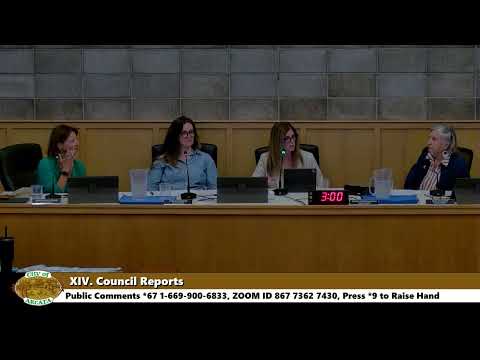
Arcadia — City staff briefed the council June 3 on the status of the Excessive Energy Use Tax (EEUT), a voter‑approved levy originally adopted in 2012 and reaffirmed in 2022.
Deputy Director of Environmental Services Emily Benby outlined the tax’s structure and intent: the EEUT is a 45% surcharge on residential electricity consumption above 600% of the baseline allowance established by the California Public Utilities Commission; certain medical exemptions and an all‑electric baseline adjustment are available. Benby said the tax was aimed partly at discouraging illicit high‑usage activity, such as large indoor cannabis grows at the time of the original measure.
Benby said the number of meters subject to the EEUT has declined from an estimate of roughly 633 at the time of passage to about 17 today. “We do get data from PG&E every month,” Benby said, and the city estimates cumulative revenue since 2013 at about $2.5 million and current annual receipts near $40,000. She described operational challenges such as delays when customers request an all‑electric baseline through PG&E and the city’s limited ability to associate meter counts with household characteristics because the utility does not provide identifying information.
Council members asked whether repealing or pausing collection would require a ballot measure; a staff speaker responded that the council can reduce, pause or stop collecting a tax but that legal review would be needed because the measure is tied to other fees. Several council members said they wanted the energy committee (meeting June 15) to review the data, consult with regional partners (RCEA) for kilowatt‑hour estimates, and return recommendations to council.
Vice Mayor Stacy Atkinson Salazar and council members noted the EEUT appears to have met its original purpose of deterring high‑use properties but acknowledged that declining revenue could affect general fund budgeting. The council did not take formal action on the tax at the meeting but requested slides and further analysis from staff and the energy committee.
What’s next: staff will share presentation slides with council and the energy committee will consider the EEUT’s effectiveness and options for outreach, adjustment, or elimination ahead of the 2036 sunset.