Get Full Government Meeting Transcripts, Videos, & Alerts Forever!
Get email alerts on the Wastewater Treatment topic
No spam. Unsubscribe anytime.
Arcadia council backs levee augmentation to protect wastewater plant after feasibility study
Summary
After a multi‑year feasibility study, Arcadia staff recommended and the council directed work on levee augmentation around the wastewater treatment facility — the least environmentally damaging and most cost‑effective near‑term alternative — while continuing planning for longer‑term retreat options.
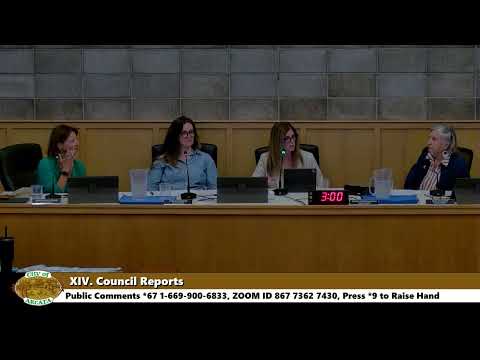
Arcadia — The City Council on June 3 directed staff to move forward on a staff‑recommended alternative to augment levees around the core of the Arcadia Wastewater Treatment Facility and to continue adaptive management of the facility’s enhancement marshes.
Director Sinkhorn, who presented the final feasibility study completed in March, said the analysis looked at eight alternatives to prepare the plant for sea‑level rise through 2100, from protection and levee augmentation to relocation and consolidation with other facilities. “Our recommendation is proceeding with alternative 1: augmenting the levy around the core area of the treatment facility and continue to adaptively manage the enhancement marshes,” Sinkhorn said. He described Alternative 1 as “the least environmentally impactful” and likely the most cost‑effective for residents and ratepayers.
The study evaluated options for elevating the core area (roughly to 15 feet) and considered building new enhancement marshes at higher elevations, retreating to a relocated site north of Highway 255, or consolidating discharge infrastructure with regional partners. Sinkhorn warned that delays have tightened timelines tied to the facility’s permit and a regional board time‑schedule order requiring additional treatment upgrades to meet stricter ammonia limits.
Council members pressed staff on costs, land needs and timing. Council member Stillman recalled the plant’s earlier evolution and asked whether relocation would require property acquisition; Sinkhorn said immediate property purchases would not be required under Alternative 1 but acknowledged land acquisition may be needed in later decades if marshes lose capacity. Council member Schafer and Council member Matthews both expressed support for a phased approach that addresses required Phase 2 upgrades while preserving the marshes’ ecological and recreational value.
Public commenters including longtime resident Joanne McGarry urged continued experimentation with decentralized or pilot projects and emphasized planning for the long term, but said the levy augmentation pathway was sensible given current funding realities. Sinkhorn said the city will pursue grant‑funded levy augmentation design work, anticipate reviews by Cal OES and FEMA, and move forward on required Phase 2 upgrades to satisfy regional board timelines.
The motion to direct staff to proceed with the recommended alternative passed with unanimous support. The council also asked staff to return with design and funding timelines and to continue coordination with state and regional regulators.
What’s next: staff will seek grant funding and proceed to the next phase of design and environmental review if funding and regulatory reviews proceed as anticipated.