Get Full Government Meeting Transcripts, Videos, & Alerts Forever!
Get email alerts on the Public Safety topic
No spam. Unsubscribe anytime.
Edgar County board moves forward with joint dispatch planning, schedules special meetings
Summary
After a lengthy study-session debate about governance and transparency, Edgar County board members agreed to move ahead with planning a joint dispatch center and to convene a negotiating subcommittee and a posted special meeting to develop an intergovernmental agreement.
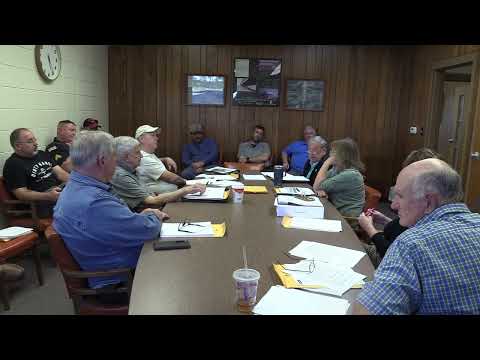
The Edgar County Board advanced plans to explore a joint county–city emergency dispatch center after a study-session debate that ran more than an hour on governance, staffing and transparency.
Chair said the board’s intent was to “move to the place where the city and the county go together and out of the dispatch over here, and they have joint dispatch,” and asked whether any member objected to exploring the concept. Board members repeatedly framed the proposal as an effort to improve efficiency and public safety while warning it would require detailed governance work.
Speakers emphasized that a joint dispatch center would need a clear governance structure, stable funding and personnel rules that account for union protections. One board member summarized options: “We can form joint dispatch and hire them in, and we encourage them to laterally move over,” adding such a structure would make governance and hiring more straightforward for the 9-1-1 director.
Members discussed two governance approaches: strengthening the Emergency Telephone Systems Board (ETSB) or creating a separate intergovernmental governing board with an executive committee to handle day-to-day oversight and a personnel subcommittee for grievances and discipline. The board repeatedly returned to the need for a governance body that could set policy, training and grievance procedures while giving key stakeholders—sheriff, police chief and county representatives—a voice.
Transparency and public notice were recurring points: several board members urged that negotiation meetings be posted and that interested citizens and fire/EMS stakeholders be invited so constituent questions do not circulate as rumors. One member said earlier, unposted meetings had prompted calls from concerned constituents who “didn’t even know that that’s going on.”
On procedure, members agreed to use the negotiating committee (previously described as Jeff, Samantha and one other member) as the starting negotiating body and to invite 9-1-1 board members and other stakeholders to a posted special meeting. The board discussed potential dates (early June or May 19 were suggested) and agreed staff would circulate an agenda and make the meeting public.
No final intergovernmental agreement was approved at the session; instead the board authorized further negotiations and scheduled the posted work sessions and subcommittee meetings needed to draft an enforceable agreement and governance model.
What’s next: the negotiating subcommittee will coordinate with 9-1-1 board members and the sheriff’s office to draft a framework for governance, staffing and funding, and return to the full board for any formal approvals.