Get Full Government Meeting Transcripts, Videos, & Alerts Forever!
Get email alerts on the Historic Preservation topic
No spam. Unsubscribe anytime.
Consultants propose phased $1M–$6M stabilization and rehabilitation plan for Abolition Hall complex
Summary
A consultant team presented a year-long assessment and a three-phase roadmap to stabilize and rehabilitate buildings on the Corson Tract, recommending a roughly $1,000,000 startup package and $5–6 million for comprehensive rehabilitation while urging interim safety work and fundraising; the committee discussed grants, environmental precautions and next steps.
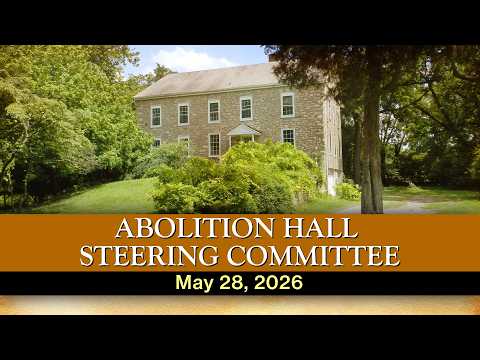
A consultant team delivered a preliminary planning and conditions report to the Abolition Hall Steering Committee on May 28, recommending a three-phase program to stabilize and rehabilitate Hovindon House, Malsby Barn and Abolition Hall on the Corson Tract in Whitemarsh Township.
The consultants said the plan begins with a startup phase focused on life-safety repairs, pedestrian and vehicular access improvements and interim measures to support programming. "The total rough order of magnitude, for overall phase 1 is approximately $1,000,000," the consultant said. The report then outlines a second, larger rehabilitation phase with a rough order of magnitude of "approximately $5 to $6,000,000." The consultants cautioned these are ROM (rough order-of-magnitude) targets, not detailed contractor estimates.
Why it matters: the plan is intended to preserve historic fabric while enabling short-term public uses (tours, events and programming for underserved youth) and to create a fundraising and implementation roadmap tied to grant opportunities and township spending. The consultants emphasized phased work to allow incremental fundraising and to avoid exposing visitors to unsafe conditions.
Key findings and recommendations included: preservation-oriented repairs guided by the Secretary of the Interior'9s standards for historic treatment, prioritized near-term interventions for moisture control and structural repairs, upgrading mechanical/electrical/plumbing systems for institutional use, and establishing a caretaker apartment to provide daily on-site presence.
On environmental hazards, a committee member asked whether lead paint or asbestos require immediate abatement. The consultant responded that lead paint is present but "that is not at all unusual for buildings of this age" and that encapsulation and proper stabilization prior to occupancy are typical measures; asbestos was described as "pretty limited" and would be managed per standard disposal and worker-safety specifications.
The consultants and the committee discussed cost-estimating methodology. Committee members pressed whether the $1,000,000 and $5—25—6,000 figures were comprehensive construction costs; the consultants said ROM budgeting was used and recommended engaging a professional construction cost estimator to develop contractor-level pricing. "These numbers were based on grant applications and target numbers that seem reasonable," the consultant said, adding that a cost estimator would be essential for detailed budgeting.
Community reaction and funding: residents and committee members urged a phased, habitat-conscious approach to invasives removal and meadow restoration. Tam Paul, a resident, recommended stewardship models and phased invasive management, saying the Natural Lands Trust stewardship handbook and the Friends of High School Park example provide useful templates. A committee member who chairs the White Marsh Open Space Committee told the meeting the township'9s Act 153 open-space levy brings in about $2.5 million annually and that the Open Space Fund balance is roughly $10 million, suggesting the township has fiscal capacity to consider broader landscape investments alongside building rehabilitation.
Grants and next steps: committee staff reported three grant applications are pending, including a PHMC/Keystone planning grant (typically announced in June), a state grant for parking and trails described in the meeting as "a quarter of $1,000,000," and a small PECO grant (about $10,000) for tree planting. The consultants said phase 1 work would likely be funded through a mix of authorized township expenditures and short-term funding sources while the steering committee pursues larger grants and partnerships.
Operational notes and timeline: consultants said many proposed improvements will require design, regulatory preconditions and further engineering. The consultant'9s engagement is complete for this contract phase but the team said it remains available for follow-up questions. The report will be attached to meeting minutes; the steering committee discussed next steps for phase 1, continued programming (tours and Juneteenth), moving forward with nonprofit formation for stewardship and returning with more detailed cost estimates once a construction cost estimator has been engaged.
The committee did not take a formal vote on funding at the May 28 meeting. The consultant'9s presentation and the committee'9s questions will inform follow-up agenda items, grant work and a future meeting (the committee tentatively discussed June 25).