Get Full Government Meeting Transcripts, Videos, & Alerts Forever!
Get email alerts on the Rental Ordinance Parking topic
No spam. Unsubscribe anytime.
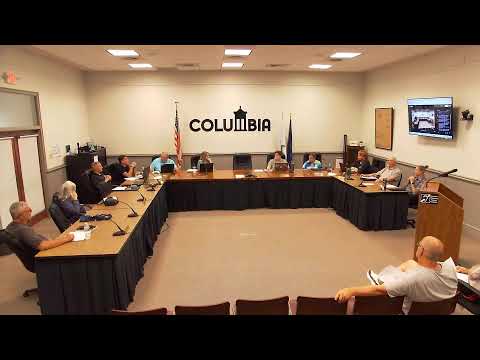
Columbia council moves to advertise revised rental ordinance after heated parking debate
Summary
Council reviewed proposed changes to Chapter 166/112—tightening standards for rental properties, clarifying ADU definitions and proposing on-premises parking requirements—then directed staff to advertise the ordinance for public hearing after a split discussion on parking minimums and enforceability.
Columbia Borough Council agreed to advance proposed changes to its rental and zoning codes while members and residents debated whether to require two off-street parking spaces for converted owner‑occupied units and clarify accessory dwelling unit (ADU) standards. Council directed staff to prepare the ordinance for advertisement at a future meeting.
The packet under review combined Chapter 166 (rental property) and related Section 112 revisions, and included new language on parking, slumlord definitions and disruptive conduct. The council president said the draft is “the cornerstone” of the borough’s code updates and stressed the package is lengthy and comprehensive. A council member who reviewed county guidance urged the body to consider reducing or eliminating minimum parking requirements, citing examples where jurisdictions adopted parking maximums or bedroom-based standards instead.
Supporters of the two-space requirement argued Columbia’s compact housing stock and frequent on‑street congestion make on‑premises parking necessary. “When you have row homes and multiple vehicles, where do you put them?” the council president asked, arguing enforcement is simpler if parking is required on the lot itself.
Opponents and one council member pointed to research and training that recommend cutting parking minimums to free space for housing and improve walkability. That member said many rental households have fewer vehicles than unit counts suggest and recommended considering maximums or tying parking to bedrooms rather than units.
Residents raised practical enforcement issues: rented off‑site spaces can be leased informally and municipalities have few reliable records to verify compliance. Council members described earlier studies showing that painting lines in some streets reduced overall capacity; others suggested targeted interventions such as marked pilot spaces, traffic‑calming islands or flexible rules for narrow blocks.
The proposed ordinance also includes clarifications about ADUs. Council discussion revealed a gap in the current draft about habitability requirements: members agreed to add an explicit requirement that ADUs be connected to water and sewer services and to define time limits for trailers or unhooked units to qualify as ADUs.
After extended debate, council agreed to move forward: members asked staff to finalize language and advertise the ordinance for public hearing at an upcoming regular meeting. No final vote on adoption was taken; the advertisement step will bring the ordinance back for formal consideration after public notice.
What’s next: The council instructed staff to prepare the official advertisement and bring the revised ordinance back for a public hearing and possible vote at a later meeting.