Get Full Government Meeting Transcripts, Videos, & Alerts Forever!
Get email alerts on the Sobe System topic
No spam. Unsubscribe anytime.
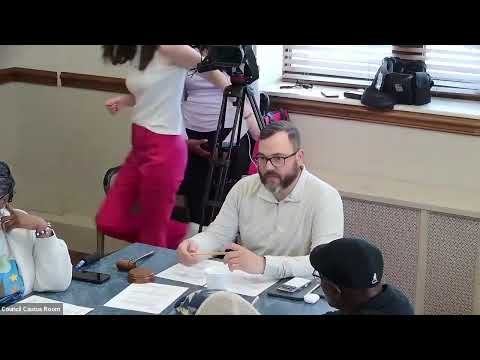
Youngstown public utilities committee forwards consultant-retention measure as downtown steam system faces shortfall
Summary
The Youngstown City Public Utilities Committee on June 1 voted to send legislation to full council to retain outside legal and technical consultants (about $130,000) to evaluate the troubled downtown steam utility after the receiver reported large arrearages, an operational shortfall and a possible emergency PUCO rate increase.
The Youngstown City Public Utilities Committee voted June 1 to forward legislation to the full Youngstown City Council that would retain outside legal and technical consultants to evaluate the downtown steam (Sobe) utility, officials said. The administration said the retention is intended to produce legal analysis and an engineering assessment, not to start litigation immediately.
Mayor Derek McDowell, summarizing a recent meeting with the utility’s receiver and the state Public Utilities Commission (PUCO), said the receiver reported an operational budget of "about $220,000 monthly" while average monthly income is roughly $110,000–$116,000. "We are bearing the burden that doesn't belong to us," McDowell said, describing a shortfall that, without intervention, could exhaust temporary funds and risk equipment repossession.
Why it matters: the committee and administration said roughly 23 buildings downtown rely on the steam system. Officials warned that an emergency PUCO tariff increase under receivership could more than double some users’ rates, and that if customers leave the system without a managed plan it could trigger a damaging revenue "death spiral." One administration estimate cited by the committee put on-site plant rebuild costs at about $13 million and delivery/pipe reconstruction at about $17 million — a combined, preliminary figure near $30 million.
What the consultants would do: lawmakers described the proposed contract (the legislation presented to the committee) as professional services to provide options and a roadmap. The administration stressed the firm being proposed has prior experience advising on steam-system rebuilds in other Ohio cities and would pair legal consulting with technical engineering analysis to conclude whether the system can be salvaged, should be partially wound down, or requires full rebuilds or other remedies.
Numbers and funding issues: committee members were shown that the receiver is also pursuing renegotiation of more than $2 million in gas arrearages to the gas provider (the receiver expects to negotiate that down to a range of roughly $500,000–$750,000, officials said). The committee was told an Enbridge settlement gift of $1,000,000 contributed roughly $750,000 toward temporary boiler rentals (about $60,000 per month), and that the gift’s remaining balance was limited and may be exhausted in a matter of months.
Timeline and urgency: administration officials said the proposed consultant team is prepared to begin work immediately once retained and that an initial assessment window of about 90 days was a reasonable starting target, though full planning and remediation could extend beyond that. Officials warned that without near-term progress the temporary funding could run out by September or October, potentially leading to service impacts.
Committee debate and next steps: several council members pressed for clarity about whether the retention would be limited to evaluation (some urged executive-session briefings for litigation strategy), the likely deliverables, and how the city would communicate with downtown building owners. Committee chair Mike Rayford asked for a motion to forward the item; a motion was made and seconded, and members agreed the measure would appear before the City Council at its meeting on Wednesday, June 3, 2026.
What was not decided: the committee did not approve funding for any long-term remediation or adopt a plan to pay for full system rebuilds. Committee members repeatedly cautioned against promising that the city would underwrite a $30 million rebuild; officials said the consultants’ report should identify options, costs and potential funding pathways, including state support.
The council referral is the immediate next step; the council is scheduled to consider the retention ordinance at its June 3 meeting.