Get Full Government Meeting Transcripts, Videos, & Alerts Forever!
Get email alerts on the Waste Management topic
No spam. Unsubscribe anytime.
Portsmouth celebrates expansion of AMP‑powered recycling facility, officials say it will extend landfill life and boost recovery
Summary
City and SPSA leaders marked the ribbon‑cutting for an expanded AMP Robotics processing facility in Portsmouth, citing plans to sort raw municipal solid waste, increase recycling and convert organics to biochar; officials said the project will extend landfill life and create jobs.
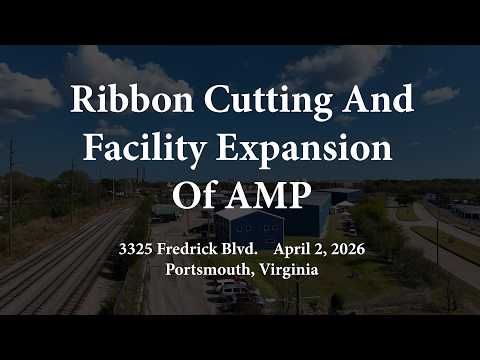
Portsmouth officials and regional leaders on June 7 celebrated the ribbon‑cutting for an expanded AMP Robotics municipal solid waste processing facility that supporters say will boost recycling, produce biochar from organics and extend the life of the regional landfill.
Brian Donahue, director of economic development for the City of Portsmouth, opened the ceremony, calling the project “the largest AI powered recycling project in the country” and saying it will recover recyclables and organics, reduce emissions and create local jobs.
The project is a long‑term collaboration between the Southeastern Public Service Authority (SPSA) and AMP and its affiliate Commonwealth Sortation, officials said. “This agreement represents the largest recycling project in The United States,” Mayor Shannon Glover said, and she described the initiative as a milestone for regional innovation and sustainability.
Tom Leahy, chairman of the SPSA board, said the authority has a finite landfill capacity and that the facility will relieve disposal pressure. Leahy said the Portsmouth facility will process about 108,000 tons per year of municipal solid waste and separate roughly 22,000 tons per year of metals and plastics from the raw waste stream without requiring homeowners to separate materials at the curb. He added that, as the program scales, SPSA expects to increase diversion and extend the landfill’s useful life from about 35 years toward 70 years.
Tim Stewart, chief executive officer of AMP Robotics Corporation, described the site’s automated system of cameras, pneumatic jets and robots that sort mixed trash. “This facility can process over a 100,000 tons of municipal solid waste or MSW annually,” Stewart said, and he told the audience AMP’s networked approach aims to boost recycling rates, increase recovery by roughly 20% and convert organics into biochar. Stewart noted a separate carbon‑removal agreement AMP has announced with Google that uses a similar biochar process.
Dennis Bagley, executive director of SPSA, said the regional authority’s procurement process identified AMP as the preferred vendor after a pilot in Portsmouth and emphasized the urgency of finding alternatives because landfill permitting in the region is limited. “We only had capacity for disposal through the year 2060,” Bagley said, describing the facility as part of a regional plan to manage waste into the next decades.
Officials described the technical approach as sorting raw municipal waste (including trash bags), breaking them open and routing materials into commodity streams and organics that are converted to biochar for sequestration or beneficial use. Speakers said AMP will provide operations and maintenance services rather than selling only equipment to SPSA, and emphasized the design priorities of continuous flow and maintainability.
The ceremony included recognition of elected officials and regional partners from member cities and county offices and concluded with a ribbon cutting and guided tours of the sortation facility.
The event did not record a formal vote or new ordinance; speakers described a previously completed selection and contracting process between SPSA and AMP. Officials said further deployments and a Victory Boulevard facility are planned as the regional network scales.