Get Full Government Meeting Transcripts, Videos, & Alerts Forever!
Get email alerts on the Housing topic
No spam. Unsubscribe anytime.
Council debates housing strategy: Gateway project progress, Martin Tower potential and the limits of local incentives
Summary
Council members and staff exchanged detailed questions about the Gateway affordable‑housing project’s funding, the city’s lack of land and recurring revenue, and a proposal to engage Martin Tower developers under an ALERTA incentive that could yield 1,000 units and $5 million upfront; administration said the first Gateway phase is fully funded but the second still needs capital.
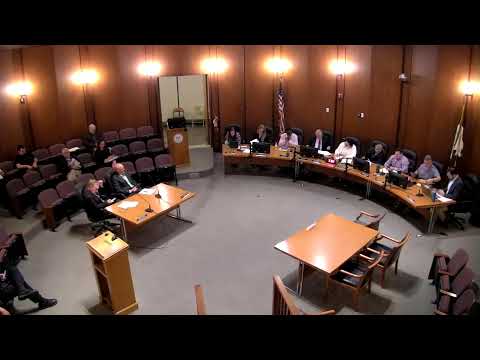
A sustained policy exchange at the May 11 meeting focused on how Bethlehem will meet its affordable‑housing targets and whether large private redevelopment offers should be pursued.
Councilman Brian Callahan pressed the administration to open talks with developers who control the Martin Tower site, which he said is already zoned for roughly 1,000 residential units and could generate "$5,000,000 of new revenue" under an ALERTA (local tax‑abatement) framework. Callahan said that amount could be dedicated to affordable housing and that the city currently has "0 land and 0 money" to build at scale.
Laura Collins, director of community and economic development, told council that the Gateway project is a two‑phase, 120‑unit development with two‑thirds affordable units, and that the city is supporting the project through grant and LIHTC (low-income housing tax credit) assistance. "For the first phase, it is fully funded," Collins said; she added that the second phase still has a capital gap and that Penrose (the private developer) is working through tax‑credit and capital‑stack options.
Collins cautioned that projects like Gateway rely on complex capital stacks — including 9% LIHTC awards and a mix of public grants — and that the city is not the developer or the primary funder. She said the city’s role is to seek public grant dollars and support applications, not to underwrite full development costs.
The conversation touched on several tradeoffs: Callahan argued that pursuing a large redevelopment that could yield immediate units and a one‑time revenue payment might make a bigger near‑term impact than smaller, programmatic efforts. Collins and others warned that remediation costs, financing constraints and LIHTC timing mean such projects are not always immediately deliverable.
Council asked for clearer short‑term projections on how many affordable units could realistically break ground in the next three years and for follow‑up on the Martin Tower owner correspondence referenced during the meeting. No binding action on Martin Tower or ALERTA incentives occurred; Collins agreed to provide more detailed capital‑stack scenarios and timelines.