Get Full Government Meeting Transcripts, Videos, & Alerts Forever!
Get email alerts on the Data And Governance topic
No spam. Unsubscribe anytime.
Billings council asks for helpline, referral and 9‑1‑1 data; schedules follow‑up with courts and partners
Summary
Council members pressed staff and advocacy partners for concrete metrics — declination rates for police risk assessments, monthly helpline call counts (including missed calls), referral follow‑through and 9‑1‑1 timing — and directed scheduling of a stakeholder meeting (courts, sheriff, county attorney) to address legislative and procedural barriers.
Council members concluded the session by asking staff to provide a set of operational metrics and to convene outside partners for a focused follow‑up meeting.
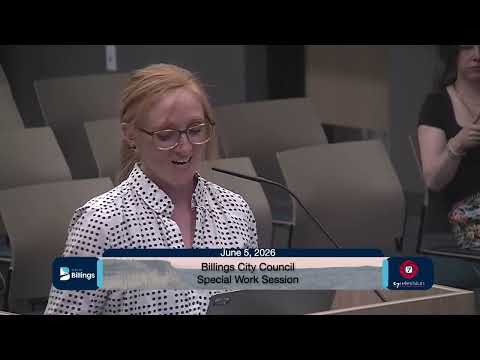
Multiple council members said basic figures would help the council evaluate whether operational or legislative changes are required. "Do you have any idea what the declination rate is?" asked Council member Andrew Lindley; Officer Katie Nash said investigators do not currently have the staffing capacity to produce a reliable declination percentage. Council members also asked Erin (YWCA) for helpline data: total monthly calls, number of missed calls, and patterns by weekday and weekend. Erin said she could provide call counts and referral summaries but that missed calls are not tracked in a way that yields a clean monthly total today.
Members expressed interest in referral reconciliation — comparing the referrals police hand to victims with who actually contacts the FJC or helpline — and whether staff could follow up on unreturned referrals. Presenters said confidentiality, discoverability and staffing are limiting factors: the APPRISE form and police reports are discoverable; the FJC's danger assessment is not. Staff proposed a targeted set of deliverables for the next meeting: declination rate (over a recent sample period), helpline call totals by day, a summary of referrals to key agencies, 9‑1‑1 time‑of‑day trends for domestic violence calls, and recommendations on whether additional staffing or funding is needed to track and reconcile referrals.
The council asked staff to invite district court judges or a court representative, the county attorney, the sheriff's office and other community partners to the next meeting; several members said the court's docketing and case prioritization are central to how domestic violence cases proceed. Staff agreed to schedule the meeting as soon as practicable and to bring the requested statistics back to council.