Get Full Government Meeting Transcripts, Videos, & Alerts Forever!
Get email alerts on the Heritage Grants topic
No spam. Unsubscribe anytime.
Douglas County approves 2026 Natural and Cultural Heritage grants amid debate over eligibility and awards
Summary
The commission approved a slate of Natural and Cultural Heritage grants after staff described a record 42 applications and $1 million in requests; commissioners and callers pressed the Heritage Conservation Council about partial awards, for‑profit applicants and geographic distribution.
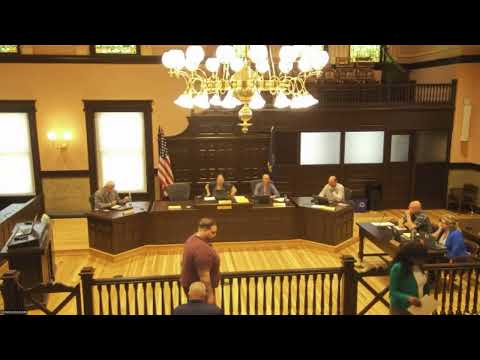
The Douglas County Commission approved the Heritage Conservation Council’s recommended 2026 Natural and Cultural Heritage Grant awards on April 15 following a lengthy discussion about criteria, matching resources and equity.
Heritage Conservation Coordinator Caitlyn Amberlin told the commission the HCC received 42 applications this year — the most in the program’s history — requesting just over $1 million. The council added $40,000 for seed grants to broaden participation and anonymized scores to guide deliberations.
“Those application materials stand on their own,” Amberlin told the board, describing two review meetings, anonymized scoring and a final consensus process. She also said the program does not distinguish cash from in‑kind match in its scoring, noting many small community organizations rely heavily on volunteer labor as match.
Commissioners probed how the council weighed in‑kind match versus cash match, how partial awards are handled and whether large institutions such as the University of Kansas should be treated differently in the review. Staff said applicants could indicate a willingness to accept partial funding and that, after awards, county staff work with partially funded grantees to refine scope or budgets so projects can proceed.
Members of the public raised questions. Paul Bomber, a former HCC member, urged the county to sustain support for preservation in outlying areas and described how small volunteer efforts leveraged earlier grants. Elsie Middleton expressed concern about taxpayer dollars going to private organizations and said several awards appeared to cluster around one cultural group; she also questioned whether public access standards were clear for some recipients.
Commissioners asked HCC to evaluate whether program guidelines should limit or clarify eligibility for for‑profit applicants, how to better track actual matched resources against proposed match, and whether tiered award sizes might better align grant amounts to project scale. Amberlin said the council planned to review the seed‑grant pilot and return with recommendations this summer.
The board moved, seconded and approved the HCC’s recommendations unanimously. Staff will finalize agreements with recipients and continue work to improve outcome reporting, applicant guidance and geographic diversity of awards.
Next steps include continuing HCC review of program guidelines and improved tracking of awarded versus realized match to better measure leverage of county funds.