Get Full Government Meeting Transcripts, Videos, & Alerts Forever!
Get email alerts on the School Budget topic
No spam. Unsubscribe anytime.
Englewood board presses administration on budget, votes to seek forensic audit as 5.7% levy looms
Summary
At a special March 24 board meeting focused on the 2026–27 preliminary budget, trustees pressed administrators for line‑item detail, questioned rising special‑education and transportation costs and lost school‑choice aid; the board approved an RFP for a forensic audit and extended the meeting for further review.
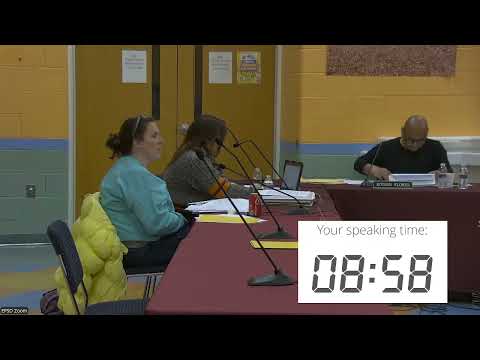
The Englewood Board of Education convened a special meeting on March 24 to press district administrators for detailed answers about the proposed 2026–27 budget and the administration’s recommendation to set the tax levy at the 5.7% state cap.
Board President Mr. Matthews opened the session by saying the meeting’s purpose was to give every trustee time to ask line‑by‑line questions before the board votes on a tentative budget. Administrators responded with breakdowns of key categories, but members and the public pressed repeatedly for clearer detail on staffing impacts, program cuts and historic uses of fund balance.
Why it matters: the preliminary operating budget presented to the board totals roughly $79.9 million, with a full budget near $81.8 million, and the administration says a 5.7% levy would raise about $3.6 million in local revenue. Trustees were told that shortfalls include a projected $1.836 million decline in school‑choice aid stemming from lower choice enrollment and a roughly 25% cut in some federal grants, increasing pressure on the general fund.
Administrators described several possible cost drivers: a significant rise in out‑of‑district special‑education tuition (presented as roughly $10.9 million in 2025–26 and $11.46 million projected for 2026–27 for students placed outside district programs), reduced IDEA funding, and higher transportation and benefit costs. At current projections and depending on the levy choice, administration estimated staffing reductions could be in the range of about 44 positions (roughly 28 teachers, six administrators and ten support staff) at the highest levy scenario.
Board members sought concrete alternatives and questioned longer‑term planning. Multiple trustees raised examples — including whether additional academy teachers could be hired so the district could admit more choice students and recover revenue — and called for clearer, program‑by‑program lists showing what reductions would mean in practice for students (for example, which after‑school clubs, elective supplies or external partnerships would be cut).
Public comment focused heavily on protecting classroom programs, especially the district’s dual‑language program, which parents and teachers said must be preserved. Dozens of residents and parents urged the board not to cut bilingual and gifted offerings, and several asked for translation services at meetings so non‑English speaking families can participate in budget deliberations.
An action the board took: after debate, the trustees approved a motion directing the administration to issue an RFP seeking proposals from independent forensic auditing firms to perform a deeper financial review of recent years’ records. The motion passed on a roll‑call vote (Yes: Mr. Flores, Ms. Haber, Ms. Matos, Ms. Ross, Ms. Wiggins; No: Ms. Banks‑Wharton, Ms. Rivera, Mr. Matthews). The board discussed scope and cost uncertainty; administration and trustees noted that an RFP must be specific about years and deliverables and that earlier cyber incidents have affected the availability of historical accounting records.
What was not decided: the board did not adopt a final tax levy or budget at the meeting; trustees set a timetable for the tentative budget notification and reminded the public that the formal public hearing and adoption are scheduled under statutory deadlines (the administration said the board will act on the tentative budget and proceed with required public notice, with an adoption vote to follow the advertised public hearing). The superintendent and business administrator said some numbers — including final grant awards and the state’s official health‑care projection — may be updated before final adoption.
Board process and next steps: trustees extended the meeting to allow more discussion and scheduled further review before the April public hearing; the head of the bilingual department and other administrators were slated to appear at an upcoming meeting to answer program‑level questions. The RFP for a forensic audit will be drafted with defined scope, timeline and cost estimates and returned to the board for review. The administration committed to provide clearer program‑level breakdowns, staffing counts, and the per‑category total dollars behind proposed reductions before the next session.
Representative quote: “If we approve this budget, we own all of it,” a board member said, emphasizing trustees’ oversight role. “Every single item in that budget…if we approve it, we own every staff or teacher cut.”
The board did not take final votes on specific staffing reductions or program eliminations at this meeting; those formal actions would follow the board’s tentative budget adoption and subsequent personnel processes as required by law.