Get email alerts on the Truancy Program topic
No spam. Unsubscribe anytime.
Douglas County delays decision on in‑house K–8 truancy program after split vote
Summary
After extended testimony from county staff, the district attorney, community partners and public commenters, the Douglas County Commission voted on May 27, 2026 to defer implementation of a proposed in‑house K–8 'Everyday Counts' truancy program until the full five‑member board can consider the plan and additional stakeholder input.
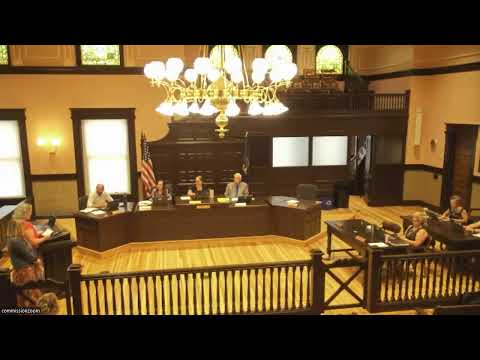
The Douglas County Board of Commissioners debated a proposed K–8 truancy program, called "Everyday Counts," at its May 27, 2026 meeting and ultimately voted to defer implementation until the board can meet with its full five‑member quorum.
Criminal Justice Services coordinator Katie Fitzgerald presented a revised program that followed superintendent recommendations: removal of a neighborhood truancy board element, more attainable attendance targets (successful completion defined as six weeks of non‑continuous attendance), a streamlined school referral form and a county truancy database. Fitzgerald said Administration and Youth Services staff met with the district attorneys and superintendents of Lawrence (USD 497), Odora, Baldwin City and Perry to revise the proposal and to plan July/August building‑level preparation and trainings.
The county's assistant district attorney, Lumis, told commissioners younger elementary students’ absences are frequently tied to family disruptions (transportation, housing or illness) and stressed the importance of timely reporting by schools so county and court interventions can occur before cases escalate. Lumis emphasized statutory reporting thresholds (three consecutive days, five per semester or seven per year) and said delay in referrals limits the county’s capacity to intervene.
Commissioner questions focused on model choice (in‑house case management vs. continued partnership with community providers such as the Center for Supportive Communities), staffing needs and budget tradeoffs. Staff estimated a current annual referral volume of about 157 with about 39 active cases at any given time; Katie Fitzgerald said splitting that caseload with another truancy officer would be manageable if referrals remain at that level.
Public commenters urged both upstream supports and pilot interventions: Meg Davis (Social Service League) proposed exercise/mentorship pilots for truant youth, and Dr. Kelsey Dachman (Center for Supportive Communities) clarified CSC’s budget requests and contributions and urged continued partnership.
After extensive deliberation, commissioners debated two options: approve the staff proposal to stand up an in‑house program with one additional coordinator and reallocate existing truancy funds, or continue funding the existing community partner through the remainder of 2026 while staff continues design work. An initial motion to implement 'Everyday Counts' and release $87,500 from the truancy fund yielded a split vote. Commissioners then voted to defer action and asked staff to return with the issue when Commissioner Willie is present so a five‑member vote can occur and additional stakeholder input can be considered.
The board directed staff to continue stakeholder convenings, refine referral/process materials and report back to the commission.
AI generated
The text on this page is AI generated. Summaries, highlights, analysis, and video transcripts are all produced from the original source material.
AI can make mistakes, so if you spot one, and we will fix it for everyone.
Note: the source content is unaltered by us. Any content source we link to, be it a video, an audio recording, or a document, is presented exactly as its publisher released it. That publisher is usually a government body, sometimes an individual official or another organisation.