Get Full Government Meeting Transcripts, Videos, & Alerts Forever!
Get email alerts on the Ambulance Dispatch topic
No spam. Unsubscribe anytime.
Sheriff warns board that proposed ambulance RFP and out-of-county dispatch could hurt response times
Summary
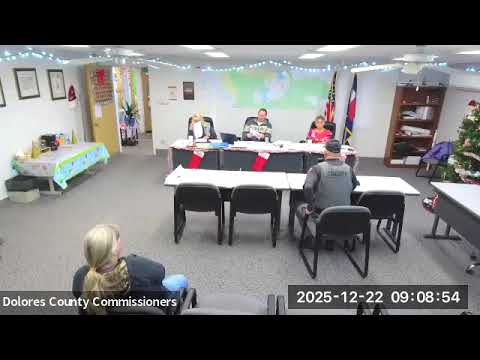
At the Dolores County Board meeting Dec. 22, the sheriff urged commissioners to keep dispatch local and warned a proposed ambulance RFP that would move dispatching to another center could raise costs, require additional 24/7 dispatch staff and risk slower responses in remote areas.
At a Dec. 22 meeting of the Dolores County Board of County Commissioners, the sheriff (introduced at the meeting as Sheriff Wilson) told the board he is concerned a proposed ambulance request for proposals (RFP) could shift dispatching out of Dolores County and harm response times and local knowledge.
"My main concern I have is making sure our dispatch stays the same and making sure it stays local for all our EMS people," the sheriff said, arguing that local dispatchers "understand the character of our county and making sure that they know where they need to go." He said county dispatchers routinely flag high-risk locations in the CAD system and that moving dispatch to another center could delay deputies and ambulance crews.
The sheriff and other local responders said the RFP as drafted would add procedural requirements and costs the county does not currently bear. The county does not have Emergency Medical Dispatch (EMD)-certified staff, and speakers said implementing round-the-clock EMD capability would require additional full-time dispatchers and significant new expense. County staff noted the jurisdiction currently pays Cortez approximately $11,000 per year for 24-hour dispatch support but said other costs tied to EMD certification and full 24/7 staffing would be much greater.
Commissioners and local fire and emergency personnel also raised a separate but related operational issue: unit call signs and radio-channel assignments. Speakers said ambulance unit numbers had been changed informally and that reuse of numbers (for example, duplicating a fire department identifier) creates safety and accountability risks during multi‑agency incidents. One participant cited National Fire Protection Association (NFPA) incident command standards on unique unit identification and called inconsistent call signs a "huge liability for everyone."
County staff and commissioners discussed next steps: drafting a letter to the ambulance board (addressed to the board, not just the ambulance chief) requesting clarity and asking for a workshop after the holidays to include the ambulance board and affected emergency‑services governing bodies. The sheriff said he had directed his dispatchers to stop responding to email exchanges with the ambulance chief and recommended a face‑to‑face meeting with ambulance‑board members to resolve points of contention.
The board did not adopt any formal policy at the meeting; commissioners agreed to pursue a public workshop to explore the RFP, dispatch capabilities, call‑sign protocols and whether the ambulance district’s request should be revised. If the county drafts or endorses an RFP, staff said it must fit the county’s operational constraints and legal/financial limits before any contract commitment.
What’s next: Commissioners asked staff to arrange a workshop with the ambulance board and relevant fire‑agency leaders to discuss the RFP, EMD staffing, radio/call‑sign standards and potential alternatives to moving dispatch out of Dolores County.