Get Full Government Meeting Transcripts, Videos, & Alerts Forever!
Get email alerts on the Public Health topic
No spam. Unsubscribe anytime.
Douglas County approves $700,000 one-time payment to shore up Treatment and Recovery Center funding
Summary
The Douglas County Board unanimously approved a one-time supplemental payment of up to $700,000 to Bert Nash to cover a cash shortfall at the Treatment and Recovery Center (TRC), after staff and provider presentations showed fee-for-service revenues were far below projections and program-specific budget work identified gaps.
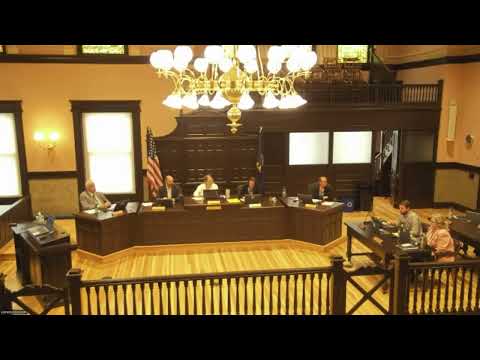
Douglas County commissioners on May 20 unanimously approved a one-time supplemental payment of up to $700,000 to Bert Nash to address a cash shortfall at the Treatment and Recovery Center (TRC).
County staff told the board that Bert Nash had initially requested $1.25 million during the 2026 budget process, later revised to $1 million, and has now asked the county to provide $700,000 from a one-time solvency allocation to cover near-term cash needs. County staff said the funding would require an amendment to the TRC operating agreement and would be invoiced monthly against actuals.
Bert Nash CEO Dr. Kirsten Watkins told commissioners TRC remains an essential local crisis resource and said the organization had refined its request after further analysis. “In the first 5 months of this year, TRC provided care to 681 distinct individuals in a mental health crisis,” Dr. Watkins said, and the 2025 total served was 1,612 distinct individuals.
Bert Nash finance staff described the core problem as lower-than-expected fee-for-service collections: the organization’s gross fee-for-service line was much higher on paper, but after contractual adjustments and sliding-fee discounts the amount collectable fell to roughly $950,000; of that, about 36% ($347,000 year-to-date) has come in as cash. Staff said that collection shortfall, combined with program-specific deficits in particular crisis services, produces a forecasted cash gap that underlies the $700,000 supplemental request.
Commissioners pressed the presenter on staffing, billing improvements and contract mechanics. Bert Nash said TRC has been operating at roughly 81% of budgeted full-time equivalents (with higher overtime costs to cover shifts), and that turnover—particularly the vacancy in a high-salary medical director post—affects monthly expense variance. Staff said revenue-cycle management (RCM) improvements are under way but could not be reliably quantified for 2027 projections.
The board and Bert Nash staff described an ongoing consultant review of TRC operations; staff reported the consultants’ interim report is complete and a final report was due May 30. One member of the public urged caution about approving money before the final consultant recommendations are released.
Commissioners said the supplemental payment is intended to be one-time: Bert Nash told the board it would withdraw its supplemental request planned for 2027 if the $700,000 is approved. County staff said the payment mechanism will be invoiced against monthly actuals (the county will not disburse more than documented costs), and the county will process an addendum to the operating agreement to reflect the change.
The motion—“I move to approve Bert Nash's revised one-time TRC supplemental funding request for 2026 not to exceed $700,000”—was moved and seconded and passed unanimously by voice vote.
Next steps: staff will prepare the contract addendum and the county and Bert Nash will continue work on RCM fixes, consultant recommendations and the 2027 budget. The final consultant report and updated monthly actuals will inform any future discussions.