Get Full Government Meeting Transcripts, Videos, & Alerts Forever!
Get email alerts on the Compensation topic
No spam. Unsubscribe anytime.
Board approves updated certified-staff pay scale after compensation study
Summary
The Chippewa Falls Area Unified School District board voted to adopt a new certified staff pay scale based on a BRC 61st-percentile benchmark, citing retention concerns and an annualized step process; the change carries immediate budget implications as staff work to balance next year's preliminary budget.
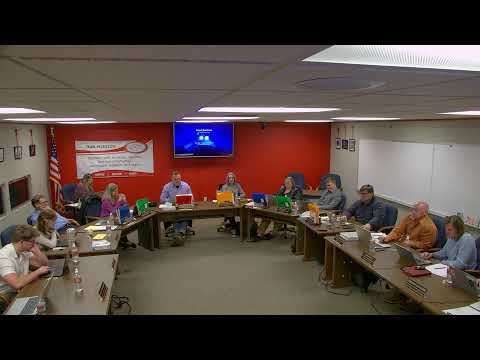
The Chippewa Falls Area Unified School District board on March 24 approved an updated compensation scale for certified staff that uses the Big Rivers Conference comparables at the 61st percentile and applies a 2% increase to Schedule C stipends.
District staff presented the recommendation and detailed its projected cost and design. "My recommendation is to accept the updated compensation for certified staff, substitutes and Schedule C using the 61st percentile with the Big Rivers Conference as our comparables to set our midpoint," Sarah, a district staff member leading the compensation work, told the board. Staff said the change pairs a market-comparable base with an annual step process intended to reduce turnover and make future adjustments smaller and more predictable.
The proposal includes specific midpoint and maximum figures for certified staff (base without a master's at $50,090 and cap without master's or national board at $82,660; with master's or national board the cap was presented as $87,606) and minor adjustments to substitute and long-term substitute rates. Staff emphasized that the increase is large primarily because certified teachers are the district's largest employee group and the district has not studied pay scales in several years.
Board members asked how the new scale compares to nearby districts and how the change will affect long-term staffing. The presenter said the district will remain in the mid‑range for starting pay compared with peers and will be near the top for maximum pay, and that the district used a mix of local comparables and a 61st-percentile policy decision to set midpoints.
The board voted by roll call to adopt the recommendation; the clerk recorded the motion, and the chair announced the motion carried. Administrators said they will incorporate the new scale into the preliminary budget and continue to identify offsets to present a balanced budget at the district's April meeting.
Board reaction and next steps: board members thanked the compensation team for the analysis and noted the district will need to find savings or accept personnel reductions in order to fund the increase without undermining classroom programs. Finance staff will reflect the compensation changes in the April budget materials.
The board's approval takes effect for budget planning; administrators said the district intends to implement a more frequent (every three years) compensation review process after this change.