Get Full Government Meeting Transcripts, Videos, & Alerts Forever!
Get email alerts on the Education Assessment topic
No spam. Unsubscribe anytime.
Board accepts social studies report after high‑school showcase; state proficiency edges up
Summary
The Chippewa Falls Area Unified School District board accepted an R2.1D monitoring report showing state social studies proficiency rose from 59.4% to 61.1% and local standards proficiency at 87%, after a showcase from Chippewa Falls Senior High highlighting civic projects, AP success and student engagement.
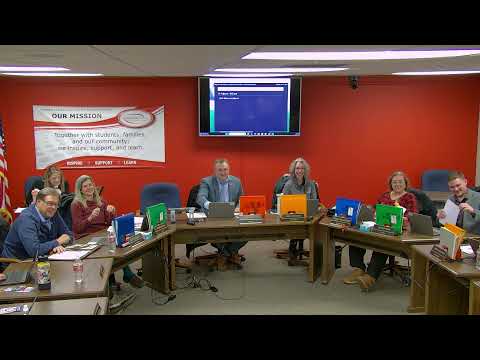
The Chippewa Falls Area Unified School District board on Monday accepted a monitoring report showing modest gains in social studies proficiency and heard a showcase from the district’s senior high social studies department.
Director of Teaching and Learning Katie Coppenberger presented the R2.1D report and said the district’s overall proficiency on the Wisconsin social studies exam rose from 59.4% to 61.1%. She told trustees that the district also exceeded its local standards target, reporting 87% proficiency on priority standards, and that growth occurred across historically high‑risk student groups. "These results are not accidental…they're driven by our teacher leaders and reflect strong partnerships with our social studies department leaders," Coppenberger said.
The presentation followed a showcase by Chippewa Falls Senior High, introduced by Principal Donna Goodman, in which academic chairs John Kinville and Jason Bob described a department focus on a "portrait of a graduate": engaged citizenship, problem solving, effective communication, resilient thinking and lifelong learning. Kinville and Bob highlighted student civic projects that connected classroom work to local policy outcomes, AP participation and pass rates, and extracurricular activities such as mock Supreme Court, DECA and FFA service projects. "All of these things keep the students engaged in school and prepare them for the real world," Goodman said.
After staff Q&A and a brief board discussion about monitoring indicators and how to refine targets, Trustee [motion maker recorded as Mawan] moved that the board accept the report as its own; a second was recorded and the motion carried. The board's acceptance formally found that the district has made reasonable progress on R2.1D.
Board members asked staff to continue reviewing indicator language and to consult academic leaders about possible refinements so future monitoring reports better reflect district priorities. Coppenberger said staff will continue to analyze item‑level trends and work with school leaders to address areas of fluctuation.
The report and the high school showcase provided both data and classroom examples that district leaders said together supported the recommendation to accept the monitoring report. The board placed the R2.1D report on its records for further use in indicator and curriculum planning.