Get Full Government Meeting Transcripts, Videos, & Alerts Forever!
Get email alerts on the Active Transportation topic
No spam. Unsubscribe anytime.
Jericho board approves Option 3 for Browns Trace/MMU pedestrian path, keeps bridge reuse on the table
Summary
The Select Board approved the design team's recommended Option 3 for the Browns Trace to MMU pedestrian path, citing a balance of visibility and environmental impact; the project is funded in part by a $600,000 grant and may reuse a decommissioned bridge pending structural review.
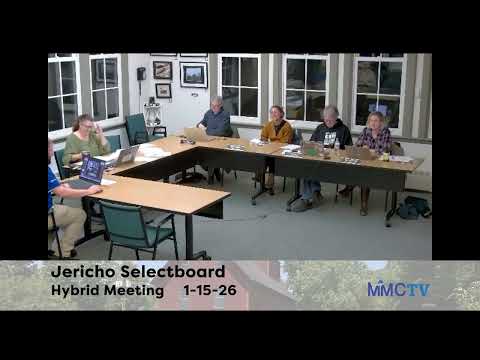
Jericho Select Board on Jan. 15 approved the design team's recommendation to build the Browns Trace to MMU pedestrian path using the hybrid alignment known as Option 3, a choice officials said balances visibility, maintenance and wetland impacts.
"We're here just to give you an update on the Browns Trace pedestrian path and bridge and discuss a couple of options for the alignment," Israel, the project presenter, told the board as he reviewed past studies, grant awards and design work. The town received a transportation alternatives grant for the northern section in 2024 and selected Santech for design in 2025.
The design team presented three alternatives. Option 1 would place the path close to the road (about a 90‑foot bridge span) and score highest for visibility but required longer spans and greater construction impact. Option 2 runs under power lines, shortens the span but sits farther from the road and raises safety and wetland concerns. Option 3 seeks a middle ground: closer to the road without crossing existing bridge wing walls, an estimated ~60‑foot span and lower wetland impact. The design team recommended Option 3 and the board approved the motion by voice vote.
Funding and schedule details remain preliminary. The existing grant award is $600,000, with a town match currently estimated at $150,000, putting the early budget in the roughly $625,000–$750,000 range pending design and geotechnical work. Israel cautioned the board these are early numbers: "these anticipated bridge costs...are pretty high because we don't have a lot of detail yet," and said geotech could reduce foundation costs materially.
Board members and the presenter also discussed reusing a nearby decommissioned concrete‑deck bridge stored at the highway department as a potential cost saver. Israel said reusing the old bridge could provide "significant savings" but would require structural engineering to determine feasibility, and could involve cutting and segmenting the deck and lead‑paint remediation.
Next steps: with Option 3 approved the town will develop 25% plans, refine cost estimates, pursue NEPA clearance (likely a categorical exclusion for this federal‑aid project), and then advance right‑of‑way work and final design. Israel said permitting and NEPA review typically push construction into a multi‑year schedule and estimated a plausible construction year of 2028.
The board asked the project team to return with a public information meeting after NEPA clearance to present conceptual plans and costs to residents.